You are viewing 1 of your 1 free articles
Venn’s managing director Oriane Auzanneau on backing build-to-rent with government guarantees
Venn’s managing director Oriane Auzanneau tells Denise Chevin how government guarantees are reshaping housing finance and building investor confidence


 Investor interview: Venn’s managing director Oriane Auzanneau on backing build-to-rent with government guarantees #UKhousingVenn’s managing director Oriane Auzanneau tells Denise Chevin how government guarantees are reshaping housing finance and building investor confidence #UKhousing
Venn
- Sector: Funding for affordable housing and build-to-rent
- Asset value: Venn currently manages and deploys £11bn across residential strategies, representing around £6bn of assets under management and £5bn in active mandates (capacity to lend)
- Programmes: Build-to-rent government-backed scheme – £1.7bn in assets under management and capacity to lend another £1.8bn; UK Affordable Homes Guarantee Scheme – £3bn assets under management and £3bn in lending capacity
As the UK looks to accelerate housing delivery under intensifying cost pressures, investment managers are occupying territory once dominated by banks and grant funding. One of the most prominent is Venn, the residential investment manager that was founded in 2009.
Built from scratch, the firm now manages around £6bn in assets, with a further £5bn mandate capacity – ie money it can lend. A core focus is providing institutional funding across the short, medium and long term for affordable housing and build-to-rent, backed by UK government guarantees.
Venn also runs strategies that provide access to home finance for households that are underserved by banks, spanning Sharia-compliant mortgages and rent-to-own products in the UK, and first-time buyer mortgages in the Netherlands. However, its significance lies chiefly in the scale of capital it is now deploying through state-backed schemes.
Read more


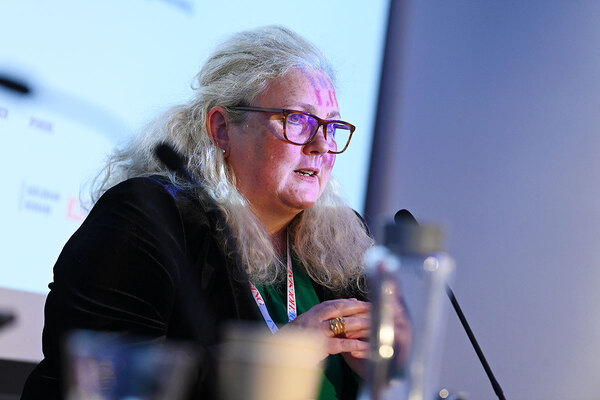
“We’re not a bank, we’re an investment manager,” says Oriane Auzanneau, managing director at Venn, who leads the firm’s affordable housing activity. “We focus on residential strategies that can be developed at scale and deliver a social or environmental impact.”
“There is an undersupply of housing,” she adds. “There are lots of pressures that the government and banking market alone can’t solve. That creates a space for an institutional asset class to develop.”
How the guarantees work
Venn manages two programmes for the government: the £6bn UK Affordable Homes Guarantee Scheme and the £3.5bn Private Rented Sector Guarantee Scheme. Under both programmes, Venn lends directly to housing associations or build-to-rent operators, then raises funding through bonds issued to institutional investors.
“Because the bonds that we issue benefit from a guarantee from UK government, they bear the credit rating of UK government,” Ms Auzanneau explains.
“If you were asking me what investors want, they want stability. Stability, stability, stability”
“For investors, the exposure is to sovereign risk rather than housing performance. Our bonds typically trade at a small premium over gilts [UK government bonds] to reflect that they are less liquid, and the return is attractive to domestic institutional investors, as well as those based overseas.”
“Our bonds effectively trade at gilts plus a liquidity premium,” she adds. “At the moment, that’s around 30 to 50 basis points over the relevant gilt.”
This offers an attractive premium for low risk for investors, such as pension funds, insurers and sovereign wealth funds. “It is actually a compelling return for investors for the very low level of risk they’re getting,” Ms Auzanneau states.
Crucially, for the affordable housing guarantee programme, the benefit of the lower pricing flows through to borrowers.
“Because we pass the pricing down to our social housing borrowers, they pay a much lower price than they would have by going directly to the capital markets,” Ms Auzanneau adds.
“Without the guarantee they might be paying gilts plus 100 basis points instead of gilts plus 30. So, in practice, government is essentially passing support to the sector. It’s subsidised funding.”
How the Affordable Homes Guarantee Scheme evolved
The Affordable Homes Guarantee Scheme launched in 2021 with an initial £3bn allocation. Venn issued its first bond in November that year.
Since then, the scheme has doubled in size and evolved in purpose. Originally, all funding had to support new build homes – a requirement that quickly clashed with reality.
As registered providers faced rising pressures from building safety, decarbonisation, disrepair and stock conditions, capital increasingly flowed into existing homes as well as development.
Today, the scheme allows both, with a minimum delivery obligation.
“Guarantees are a very useful tool in government’s toolkit because they alleviate many of the concerns investors might have about the asset class”
“Any borrower must undertake to deliver new affordable homes equivalent to at least 50% of the amount they’ve borrowed,” Ms Auzanneau explains. These homes must be for social rent, affordable rent or affordable homeownership.
She adds: “A lot of applications come in with 50:50 splits. But we’re seeing an increasing number with higher allocations to new build, which is encouraging.”
Demand has risen sharply. “In the past 12 months alone, we’ve provided £1.4bn facilities to registered providers,” Ms Auzanneau says. Around half of the £6bn scheme is now allocated.
The early pace was slower. “The original structure didn’t work as well as it needed to,” she says. “The relaxation of covenants and expansion of scope was a real catalyst.”

Who can borrow
Eligible borrowers are private registered providers, which include not-for-profit housing associations and for-profit private registered providers. Venn has not yet lent to for-profit providers, which Ms Auzanneau attributes to scale rather than exclusion.
“They simply weren’t at the right scale, but we can see this changing,” she says. The borrower base has widened since the start of the programme.
“We’ve supported organisations without top regulatory gradings, London providers dealing with fire safety, and a broader range of structures than we could before.
“If you were asking me what investors want, they want stability. Stability, stability, stability,” she adds. “Guarantees are a very useful tool in government’s toolkit because they alleviate many of the concerns investors might have about the asset class.”
“I think we’re glass half full for 2026”
Ms Auzanneau describes the structure as “a neat tool” for channelling institutional capital into housing, while shielding investors from delivery risk.
Build-to-rent: a second phase
The Private Rented Sector Guarantee Scheme tells a similar story – but with a delay. Launched in 2015, the programme aimed to catalyse institutional investment into a build-to-rent sector that was still in its infancy.
“Assets weren’t out of the ground,” Ms Auzanneau recalls. By 2022, only £1.6bn of the £3.5bn was lent. The scheme re-opened for applications in March 2025 to deploy the unused capacity.
It is too soon to say how quickly capital will now flow this time around, she says, noting development viability issues. But in December 2025, Venn announced funding of its first two loans for £182m, and Ms Auzenneau says there is a healthy pipeline being worked on.
She says the outlook for housing investment is mixed and is dominated by borrowing costs only partly offset by policy support. “Higher for longer remains the biggest challenge,” she says, referring to interest rates.
“Housing has faced and continues to face combined headwinds, with elevated costs of finance, labour, materials and regulation.”
Still, Ms Auzenneau remains measuredly optimistic. “I think we’re glass half full for 2026.”
Planning reform, long-term rent settlements and new grant commitments all help. “They won’t fix everything,” she says. “But they’re encouraging.”
The investor interview series
Man Group’s Shamez Alibhai on the shift to direct development
Man Group’s Community Housing Fund, which wants to double its portfolio and get involved in projects at an earlier stage. Managing director Shamez Alibhai sits down with Denise Chevin to explain why
How Octopus Capital’s Jack Burnham plans to reach 1,000 homes – then double it
After raising its first tranche of overseas investment, Octopus Capital is confident of scaling up and building more homes with zero energy bills. Denise Chevin speaks to head of affordable housing Jack Burnham to find out more
Thriving Investments’ Cath Webster sets out expansion plans
Thriving Investments, the investment manager owned by Places for People, is focusing on homes for essential workers as it scales its regional housing funds. Denise Chevin meets its chief executive, Cath Webster
Venn’s managing director Oriane Auzanneau on backing build-to-rent with government guarantees
Venn’s managing director Oriane Auzanneau tells Denise Chevin how government guarantees are reshaping housing finance and building investor confidence
Sign up to our weekly Living newsletter
Inside Housing Living brings you exclusive analysis and big deals from the wider residential market, including build-to-rent, student living, later living, for-profit registered providers and more.
Already have an account? Click here to manage your newsletters.
Related stories