You are viewing 1 of your 1 free articles
Exclusive: house builders target affluent movers as first-time buyers priced out
House builders are increasingly targeting big families and affluent households as first-time buyers are priced out, research has shown.


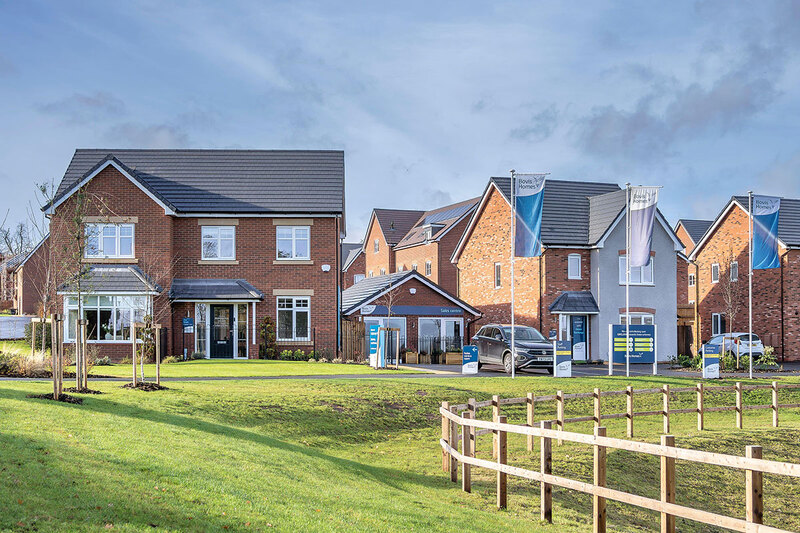 House builders are increasingly targeting big families and affluent households as first-time buyers are priced out, research has shown #UKhousing
A report shared first with Inside Housing Living found that new build house values are at their highest level relative to the resale market in over 20 years.
The research by data company Hometrack, part of the Zoopla group, compares new build homes transacting and being valued with resale values. Adjusted for location, property type and size, new build properties in 2025 sit on average in the 75th percentile of the resale market.
The last time new build prices were this far from the average resale values was in 2003. The findings suggest the current new build market is catering less towards first-time buyers and more on larger families, affluent households and home movers.
Read more
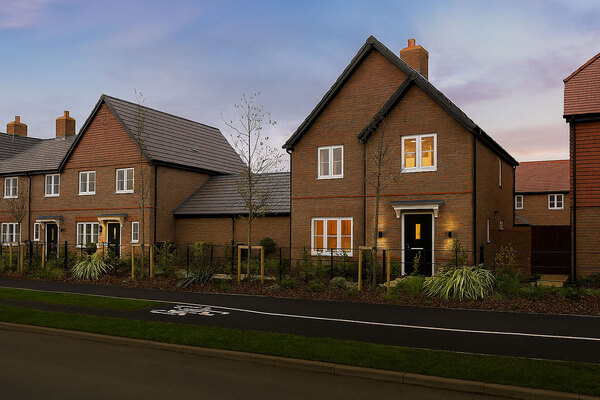

The shift comes as the cost of building new homes has risen while buyer affordability constraints have tightened. Developers face new requirements such as the residential property developer tax, building safety levy and biodiversity net gain, while the costs of materials, labour and borrowing have grown significantly.
Meanwhile, buyer affordability has suffered due to the end of Help to Buy in 2023 and higher mortgage rates. Stretched affordability means house builders cannot rely on high volumes, so instead are focusing on larger homes at higher price points to meet their revenue targets.
“It is important that the homes we build become safer and more sustainable,” the researchers said. “Yet the reality is that doing so has increased costs when market conditions have been especially challenging, distorting what is getting built and where.”
In 2025, 40% of new build sales and valuations in the country were for four-bed or larger houses, up from 31% in 2022. This distribution is out of kilter with demand, since just 24% of new build enquiries on Zoopla in 2025 were for these property sizes.
New build prices are taking a higher position compared to resales across all regions of the UK, demonstrating how affordability pressures have mounted across the entire country.
In some parts of the North of England, new build pricing is approaching the top 15% of the wider market. In less affordable areas like London, the South East and South West, new builds are priced in the top 30-35% of the wider market as property values are higher.
The report warned of a “growing problem of oversupply” for certain types of new builds such as larger family homes, and an “ongoing lack” of starter homes for couples, young families and elderly empty nesters looking to downsize. “The homes that are built and sold are not fully addressing the most immediate housing shortages,” it said.
People whose housing needs are not being met are renting privately, living in shared accommodation or staying at home with parents for much longer than they would otherwise. When they can finally afford to buy, they are older and taking longer mortgages. Many are also skipping the first step on the housing ladder and moving into larger homes to save on costs such as stamp duty.
“The result is a missing mainstream new build market that fails to provide the necessary impetus to substantially increase delivery in the private sales market,” the researchers said.
The report concluded that without targeted support like Help to Buy or a reduction in the cost of construction, low demand will continue to disincentivise developers to build at the rates necessary to meet ambitious housing targets.
Other tenures such as affordable housing or the private rented sector would need to play a much bigger role to deliver the scale and diversity of housing the country needs. But, according to the report, this would require “significantly more subsidy” from the government if the private sales market continues to falter.
The Ministry of Housing, Communities and Local Government was approached for comment.
Sign up to our weekly Living newsletter
Sign up to Inside Housing Living’s newsletter, bringing you exclusive analysis and big deals from the wider residential market, including build-to-rent, student living, later living, for-profit registered providers and more.
Click here to register and receive the Living newsletter straight to your inbox.
And subscribe to Inside Housing Living by clicking here.
Already have an account? Click here to manage your newsletters.
Related stories