You are viewing 1 of your 1 free articles
The US teachers’ pension fund building thousands of retirement homes – for Brits
Preferred Homes aims to build thousands of affordable homes for older people. Chief executive Findlay MacAlpine tells James Riding about the for-profit provider’s growth plans and US backers


 Findlay MacAlpine tells @jamesriding10 about Preferred Homes’ growth plans and US backers #UKhousing
Preferred Homes stands out from the crowd of for-profit registered providers bringing private capital into UK affordable housing. It is investing £100m in affordable rent homes for older people, with a long-term ambition to invest £1bn. The backers are unique, too: it is ultimately owned by a pension fund for American teachers.
The landlord aims to build and own ‘extra care’ schemes, meaning affordable rent homes for older people with an element of on-site support. It became a for-profit registered provider in 2020, enabling it to use development grant from Homes England’s Affordable Homes Programme. It is backed by a £100m equity commitment from TIAA (Teachers Insurance Annuity Association), the US teachers’ pension fund.
“We are not investing in existing stock, we are bringing new stock to the sector,” says Findlay McAlpine, chief executive of Preferred Homes. “We saw an opportunity to meet demand in the later living space. And to be candid with you, when we started, we thought, ‘Well, is it at the private sector end… the McCarthy Stone, Churchill retirement villages and the rest?”
After examining the private later living market, he concluded there was “no real need” for a new entrant. Where he did see an opportunity was in social and affordable housing, where the system was “creaking badly”.
Councils were “misallocating people into the wrong kind of housing situations”, he says. Some tenants were “left in the community whose needs were not being properly met” through domiciliary care, while others were put directly into nursing homes, when “they didn’t actually need that either”. There was demand for something in between: purpose-built independent living for older people that frees up general needs social housing and takes pressure off the social care system.
Mr MacAlpine’s investors also liked the idea of a “100% rental model”, which leaves the landlord in control and creates a “stable rental income stream” – unlike traditional private retirement housing, where flats are sold to occupiers, creating “pepper-potted investments”.
“So if, in 10 years’ time, that asset is not quite meeting the needs of its residents, as owner, you can actually step in and reinvest”, he says.
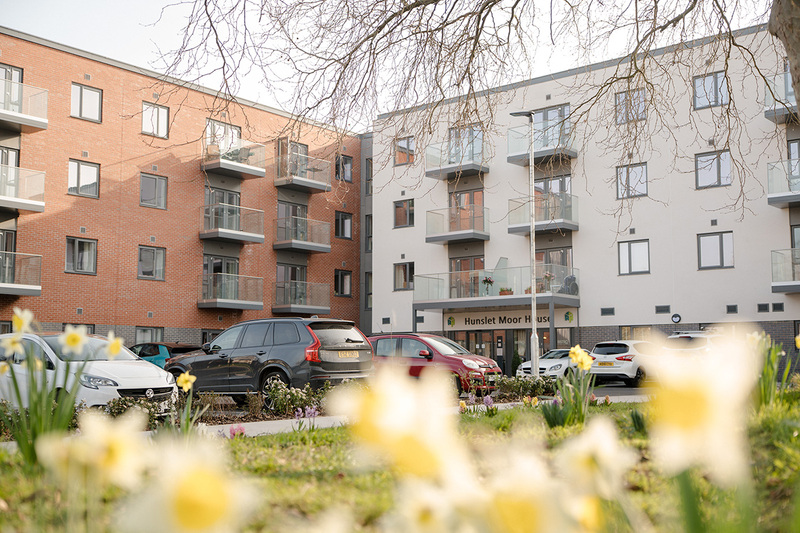
Preferred Homes now has two projects up and running in Leeds and Telford, comprising 135 flats in total. It has another nine developments, or 660 flats, in the pipeline: two are under construction (in Shrewsbury and Hucknall, Nottingham) while others (such as Camborne in Cornwall and Broadstairs in Kent) are at varying stages of planning and legals. Another “four or five” sites are at the early ‘heads of terms’ agreement stage.
But it is already thinking further ahead. “We’re looking at another 11 schemes to bring us up to 22, which will be just under 1,600 apartments, and our ambition with our partners has always been to grow that over the next two or three years, to move that 22 to 50, and by then we’ll have 3,600 apartments, and we’ll have invested about £1bn in the sector.”
Currently Preferred Homes is joint-owned by Mr MacAlpine and a number of directors on one side, and TIAA and Nuveen, an asset manager that is itself wholly owned by TIAA, on the other. Over the next year or two, the intention is that the registered provider will move into the full ownership of TIAA, the parent company. That structure will be open to other capital: local authority pension funds might be keen to get in on the action in due course, Mr MacAlpine suggests.
Preferred Homes fully owns its developments, but it offers local authorities 25-year nomination agreements for tenants. (After 25 years, as long as the scheme is active and meeting qualifying residents’ needs, the nominations agreement would be renewed for another 25 years.) At Preferred Homes’ scheme in Leeds, the city council requested an initial nominations period of 60 years, which Preferred Homes agreed to.
“It’s a right for that local authority to identify residents within its community, on its housing lists, on with-care-needs lists, and identify them as suitable residents, and therefore nominate them to come to our building,” Mr MacAlpine explains. Preferred Homes then enters a direct assured shorthold tenancy lease with that resident.
If a council fails to nominate a tenant, either “because of inefficiencies or there aren’t sufficient residents to fill them”, Preferred Homes can serve notice to take the flat back and find residents itself. However, the homes must stay at affordable rent.
Have they had to do this yet? “Yes, we’ve had an active role,” he says. “In fairness to the local authorities, it’s probably been more a product of them being a little bit overwhelmed by the workload.” An older resident’s needs might change over the two-year construction process for a scheme, he adds.
All Preferred Homes are affordable rent, ie 60-80% of market rent. “We just can’t afford to build and operate at social rent [which is typically much lower],” says Mr MacAlpine, explaining that his buildings contain lots of spaces that cannot be ‘rentalised’, such as lounge areas and staffrooms for care workers. Grant rates from Homes England would have to be double what they are today for the schemes to stack up at social rent, he adds.
The landlord mainly buys its land from councils, which means stiff competition from other buyers because “every local authority in the land is seriously strapped for cash”.
Recently, it lost out on a site Birmingham City Council was selling. “It looks like they’re going under offer to one of those supermarket operators because they are prepared to pay that little bit more money,” Mr MacAlpine says. “That’s a frustrating and challenging thing for us.”
In Exeter, however, he has had more luck: it is currently under offer on a council-owned site. “We weren’t the top bid, we were second-top,” he says. “They wanted to sell at the lesser price to us” because, among other reasons, he claims that Preferred Homes schemes will save £1m from the public purse a year in reduced doctor and hospital interventions.

Like other for-profit providers, Preferred Homes currently sub-contracts the management of its schemes to Pinnacle Group, which is owned by housing association Hyde Group. Meanwhile, the local authority care commissioning team delivers care in the building.
“We are fundamentally real estate people,” Mr MacAlpine explains, but “inevitably” there is plenty of dialogue between landlord, management and care workers. Outsourcing management makes sense at the moment while Preferred Homes’ schemes are so well spread across the country, but it would consider moving management in-house once it has started to build a bigger presence.
Some for-profits are looking to work closely with housing associations, including striking joint ventures and development deals. “We have had discussions with some [housing associations] where they perhaps have a site that’s perfect for extra care, they’d secured it for that reason,” but because they need to invest in their existing stock, they “don’t have access to the capital to bring it forward”.
“We said, ‘Why won’t we bring it forward?’… It would be our scheme, but we would run it in partnership with them, so perhaps retaining their local name and reputation.” However, none of these discussions have come to fruition yet.
Mr MacAlpine dislikes the term for-profit, preferring the label ‘private capital’. “I can’t quite recall the last time we were speaking to a local authority and they said, ‘Oh, you’re not a not-for-profit’,” he says.
As a private investor looking to make a return, “you could buy government gilts just now and you would be getting a return of 4%, 4.25% or so,” he says. “Our business model is based on a return on cost, because we’re not actually selling anything… but we in effect look at a return on cost of about 5.75%. That doesn’t sound like Wolf of Wall Street, does it really?
“The capital we are aligned to is pension fund money and pension fund money looks at a long-term stable return to meet its long-term stable liabilities,” he adds. Pension funds are also required to generate social impact, which affordable housing delivers in spades.
“Our business model is based on a return on cost, because we’re not actually selling anything… but we in effect look at a return on cost of about 5.75%. That doesn’t sound like Wolf of Wall Street, does it really?”
As a result of this long-term vision, Preferred Homes is not planning to sell its schemes any time soon. “Had there been an opportunity in the market to be able to go out and buy this kind of housing to meet our needs and aspirations, we would have looked at it, but it doesn’t exist,” he says.
Mr MacAlpine is optimistic for the future but feels that central government could be more prescriptive about the need for dedicated retirement housing. “I think local authorities could do with some guidance on allocations for land and housing today, rather than being left to them, pretty much,” he says. “You’ve got this £39bn of new affordable grant supporting housing. It would obviously be madness for all that £39bn to come into extra-care housing… but equally madness if none came.”
He continues: “At a local level, sometimes the local authorities are really quite unclear as to what they need and what their allocations should be through the planning process.
“Putting a 30% affordable requirement on a planning application is fine and well, but what does that mean? Is it later living affordable? Is it general needs?”
Intriguingly, he is also excited about the possibility of housing tenants from a blend of age ranges in a growing trend known as ‘all-ages extra care’.
“Local authority care commissioning officers who are a bit more switched on in this space… they’ve actually recognised that they’ve got residents they’re looking after within their communities who are not stereotyped 55-plus or 70-plus. They might be 40, they might be 35, and perhaps through some physical impairment or modest mental impairment from birth or subsequently, their needs are actually very similar to that of a 70-year-old, and they’re struggling to look after them within the community.
“I wouldn’t be at all surprised if we were sitting here in three years time, and I said about half a dozen of our residents in every scheme doesn’t fit that age criteria, but they’re very happy there.”
Update: at 11:31am, 21 August
The article previously stated that Preferred Homes was joint-owned by TIAA and Nuveen. It was updated to correct the current ownership: Preferred Homes is joint owned by Mr MacAlpine and a number of directors on one side, and TIAA and Nuveen on the other.
Read more of our articles on the UK living sector
Skyscrapers and social housing: inside Manchester’s extraordinary housing transformation
James Riding meets Tom Stannard, chief executive of Manchester City Council, and Bev Craig, leader of the council, to discuss build-to-rent, the Building Safety Regulator and affordable housing
David Partridge played a key role in the King’s Cross regeneration. What’s next on his agenda?
In an exclusive interview, former Related Argent boss David Partridge tells James Riding about his new retrofit venture and developing a net zero building standard
The for-profit director tasked with buying homes from housing associations
In an exclusive interview, the managing director of stock acquisitions at L&G’s affordable housing division sits down with James Riding to talk transfers, targets and tenures
Can student accommodation providers shift their business to meet the needs of domestic students?
Purpose-built student accommodation mostly caters for higher-income foreign students. Could building for domestic students, whose numbers are rising, address their needs and unlock new opportunities? Zainab Hussain reports
Savills IM for-profit interview: ‘We’re not going to supplant what not-for-profits are doing’
In an exclusive interview, real estate company Savills sets out how it plans to grow its for-profit provider – and its message for housing associations. James Riding reports
Sign up to our new Living newsletter

Sign up to Inside Housing’s new Living newsletter, bringing you exclusive analysis and big deals from the wider residential market, including build to rent, student living, later living, for-profit registered providers and more.
New to Inside Housing? Click here to register and receive our Living round-up straight to your inbox
Already have an account? Click here to manage your newsletters.
Related stories