You are viewing 1 of your 1 free articles
How L&G raised £770m for its affordable housing fund
Legal & General has raised £770m for affordable housing in two years, enough to fund 5,000 homes. James Riding meets fund manager Ali Farrell to find out how her team did it


 Legal & General has raised £770m for affordable housing in two years, enough to fund 5,000 homes. @jamesriding10 meets fund manager Ali Farrell to find out how her team did it #UKhousing
A lot can happen in two years. Cast your mind back to the distant reaches of July 2024: it was the month the Labour Party won a general election victory, England lost 2-1 to Spain in the Euros final and the song of the summer was Sabrina Carpenter’s Espresso.
It was also the month Legal & General (L&G) launched a fund to steward third-party capital into affordable housing.
At that point, the UK’s biggest asset manager was already a few years into the affordable housing business, using funding from its own annuity book, but the next step was to grow its investor base.
“We’ve proven the model,” says Ali Farrell, who manages L&G’s affordable housing funds. “We’ve been doing this since 2018, invested £1bn of balance sheet money in affordable housing, and built up the capability and the operator. We were then really excited to externalise to our clients.”
Over the two years since, L&G has raised a total of £770m for affordable housing. And Ms Farrell has recently been promoted. On top of her affordable housing role, she is now overseeing L&G’s single-family private rental (SFR) team, which is run by David Reid.
Read more
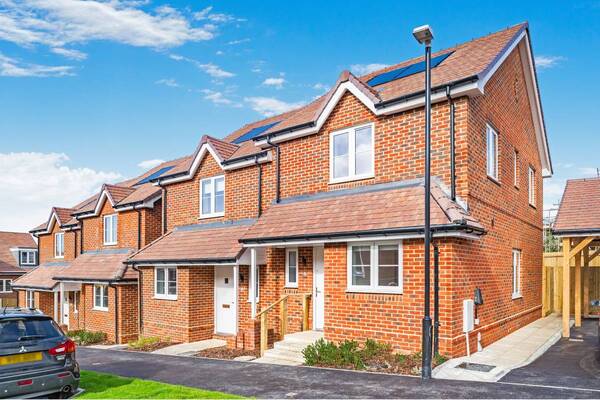


“There’s a lot of continuity across what we’re doing in affordable and what they’re doing in SFR, and how we can capitalise on that, and some of the developers are quite interested in how we can bring some synergy there for them,” she says.
To mark the two-year anniversary of the affordable housing fund, Inside Housing Living caught up with Ms Farrell over video call to reflect on the fund’s progress and where the strategy is headed next.
‘Investors are aligned’
L&G launched the affordable housing fund with a £125m investment from Access Pool, a group of 11 local government pension schemes (LGPSs). Fundraising has since grown sixfold, while the investors now include defined contribution (DC) pension schemes, impact investors and charities.
Within L&G’s affordable housing fund, there are now three distinct vehicles. There is the national vehicle, which is the “core, UK-wide strategy”, says Ms Farrell. Then there are two regional arms, set up and backed by key investors in the main strategy: the Access vehicle, bankrolled by some of the underlying members in the Access Pool; and the Northern vehicle, backed by the Greater Manchester Pension Fund (GMPF). L&G did not disclose the investor base for the Northern vehicle but said GMPF is its “cornerstone investor”.
“The focus of those vehicles is to deploy regionally into some of those areas,” Ms Farrell says. “Investors are aligned, so they are also active in the national mandate as well, and then they also have their local strategy, where we can really target their local areas and deliver some of those LGPS outcomes that they’re trying to achieve.”
As its operations business overseen by Shaun Holdcroft has grown, L&G’s pitch to investors has got stronger. “[We] can draw grant, [we] can operate the homes,” Ms Farrell says. “We obviously use partners in the market as well to help us operate those homes.”
And in March, L&G’s social landlord was graded C1 for consumer standards by the Regulator of Social Housing, adding to its top marks for financial viability and governance.
“Our clients are really resonating with the model that we’re operating, the scale that we can get to and the fact that the L&G brand sits behind it as well,” Ms Farrell adds.
LGPS ‘came on a journey’
Britain’s LGPS has nearly £400bn of assets, but these are mostly listed equities rather than physical assets like housing.
Council pension funds have “come on the journey with us over the last two years”, says Ms Farrell. “At the start, there were questions around reputational risk and exposure and getting comfortable with how the homes would be operated with their investment.
“Two years on, they really feel comfortable and confident and have bought into that [strategy]... and they can see that it’s becoming a more mature investment class.”
As they have become more acquainted with affordable housing, LGPSs have also entered the single-family rental market, with blockbuster deals like the £629m acquisition of PRS REIT by an LGPS joint venture with Waypoint Asset Management in late 2025, and LGPS pool Border to Coast’s £400m purchase of 866 SFR homes from Blackstone earlier this month.
“It’s another way where they see that they can invest into housing, which is delivering some of the return requirements that they need: positive, inflation-linked returns alongside that local piece,” says Ms Farrell. “And SFR is almost easier to do on a local basis, because you don’t have the regulatory constraints around it.”
Does single-family housing, which is part of the private rented sector, offer higher returns than affordable housing, where rent increases are capped by the government? Interestingly, Ms Farrell says returns between the two tenures are “similar at the moment”.
“Affordable housing is definitely returning really strongly to our investors against the metrics that they’re looking for. The occupancy of the portfolio is in the high 90s [%], and costs are capped… [and] SFR also generates really strong performance.”
Pooling and Mansion House
In July 2024, the government launched a review of LGPSs and workplace DC schemes, designed to increase local investment in the UK. Following the review, the eight LGPS pools were merged into six “megafunds” to leverage scale and management expertise.
Then, in 2025, 17 UK pension providers signed the Mansion House Accord, which committed them to invest 10% of their DC funds in private markets such as property by 2030, with at least half of that specifically within the UK.
Have these initiatives helped L&G with its housing strategies? And might it not be harder to achieve ultra-local outcomes as the pools merge and grow?
“Pooling’s been a really interesting one because that’s bringing together the underlying members into one, in theory, regional area. Although it’s definitely changing a little bit now,” Ms Farrell says.
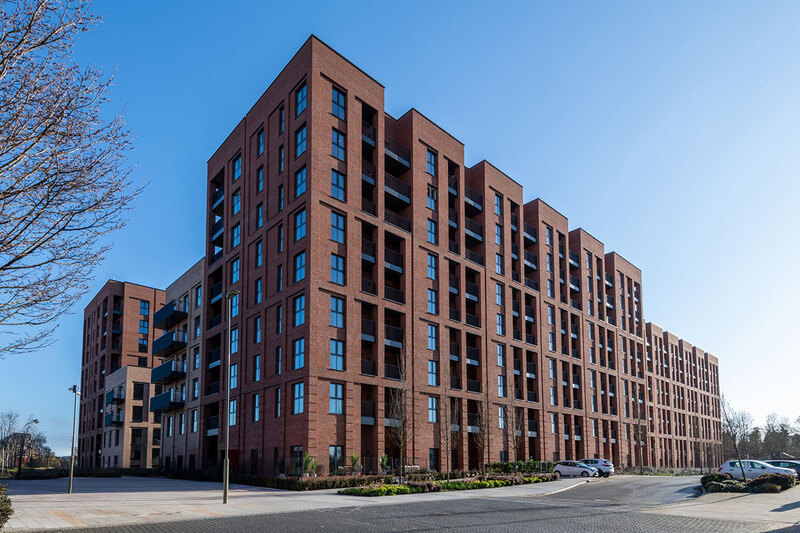
Instead of local investment, she says, L&G prefers the term ‘regional investment’. “We’ve always been very vocal to our clients [that] being too local could end up disturbing pricing dynamics within a certain area.
“So we like to stay more regional, which helps maintain a diversified portfolio while still delivering local impact, and to make sure that we don’t dominate the market in one area.
“But the pooling is definitely going to create more interest from them, and the pools are quite focused on their local strategy as well, to align with objectives of the Mansion House reforms.”
The rise of social rent
Ms Farrell’s biggest surprise of the past two years working on the affordable housing strategy is the amount of social rent homes L&G has been able to fund, “which we probably didn’t expect when we set out”.
Two years ago, the institutional capital coming into affordable housing was predominantly funding either affordable rent or shared ownership, she says.
The Labour government brought a renewed focus on social rent. It pumped £2.85bn of bridging funding into the previous government’s Affordable Homes Programme, but with a clear prioritisation of social rent. This was followed by the £39bn, 10-year Social and Affordable Homes Programme (SAHP), which opened for bids in February, and aims to deliver 180,000 homes for social rent out of a total of 300,000 by 2036.
“Institutional [registered providers] are delivering additionality and high-quality social rent homes, which I think the market was not expecting them to do”
“We were able to secure some grant in the bridging programme to make all-social-rent schemes,” Ms Farrell says. “So the social rent proportion of the portfolio has actually become quite a meaningful amount now, just over a third.”
As a result, key measures of social impact across L&G’s portfolio – such as rents as a percentage of market rents – have improved.
“Institutional [registered providers] are delivering additionality and high-quality social rent homes, which I think the market was not expecting them to do, and deploying grant, which again I think the market was not expecting them to do,” Ms Farrell says.
Deploying the cash
It is vital that L&G shows its investors it can swiftly and successfully spend their capital – so how is the deployment side of the strategy going?
Ms Farrell says L&G now has 2,600 homes in operation owned by the affordable housing fund. On top of this, it has 1,600 homes under construction funded by the government’s bridging grant programme, of which 40% are social rent. Finally, it has 1,500 homes under offer, of which 1,000 are waiting for grant from the new SAHP.
“If we execute all of that, we are fully deployed,” she says. “That would be all of the funds that have been committed will be contracted and deployed.”
The asset manager identifies affordable housing opportunities in all sorts of ways. “Sites come through national and local house builders,” she says. “They come through land agents. They also come through some of our [LGPS] partners and their combined authority – there’s some interesting land opportunities that come through those.”
L&G submitted its bids for the SAHP to Homes England and the Greater London Authority in April, and it is expecting to hear a response from the funding agencies in September. “It’s quite an important one for us to get that certainty over the next couple of months,” Ms Farrell adds.
Engagement with the funding agencies is “still very strong”, but “the message is just [that] the lack of certainty is delaying projects”.
“That’s probably our ask to the government, just giving that bit of certainty, so that we can we can get going,” Ms Farrell says.
Future of the fund
L&G’s affordable housing fund is open-ended, Ms Farrell says, meaning it will continue to try to attract cash from investors.
“This is a flagship for L&G, so we will continue to raise funds for this strategy,” she says. “The current money raised will deliver around about 5,000 homes, and we’re looking to gain on that.”
There is “no specific target” size for the fund, but “we’ll continue to raise”.
What about L&G’s SFR strategy, then? Ms Farrell points out that the affordable housing and SFR teams already work “relatively closely” together.
“The type of home and the type of customer is very similar,” she says. “Most of our households, on both sides, tend to be majority families, and the service, therefore, that they require has synergies across the two.”
Much of the debate around SFR has been whether institutional investors are creating “additionality”, meaning whether they help house builders to build homes that would not have been built otherwise for owner-occupiers.
“People probably think this is a bit silly, but from an L&G perspective, part of me thinks the additionality is about how the home is managed as well”
“I think it’s accelerating the pace that they can build new homes,” says Ms Farrell – and this includes Section 106 affordable homes. But she believes big institutional landlords can add value in other ways, too.
“People probably think this is a bit silly, but from an L&G perspective, part of me thinks the additionality is about how the home is managed as well, and about what the customer in that home is getting as part of living in an L&G home.”
At the start of the year, L&G rolled out a new benefits service for its SFR residents called Neighbourhood, which includes access to virtual GPs, mental health services, childcare provision and the National Trust. It then launched the same perks scheme in its affordable housing division a few months ago.
“We’re just collecting the data on it at the moment, but... the take-up’s been really good,” Ms Farrell says.
In January, Dan Batterton, L&G’s head of housing, told Inside Housing Living that “the majority of our investment will be in the affordable housing sector” in 2026. Has his prediction come true?
“That is still the case,” says Ms Farrell. “We are seeing strong momentum across all our housing tenures: the BTR fund has taken on a new investor this year, in the last quarter, and SFR is also progressing. But yes, it’ll be affordable’s year in 2026.”
Sign up to our weekly Living newsletter
Inside Housing Living brings you exclusive analysis and big deals from the wider residential market, including build-to-rent, student living, later living, for-profit registered providers and more.
Already have an account? Click here to manage your newsletters.
Related stories