You are viewing 1 of your 1 free articles
Later living developers can ‘take a lot’ from build-to-rent and student housing, says architect
Later living developers can “take a lot” from the design of the build-to-rent (BTR) and purpose-built student accommodation (PBSA) sectors, an architect has said.


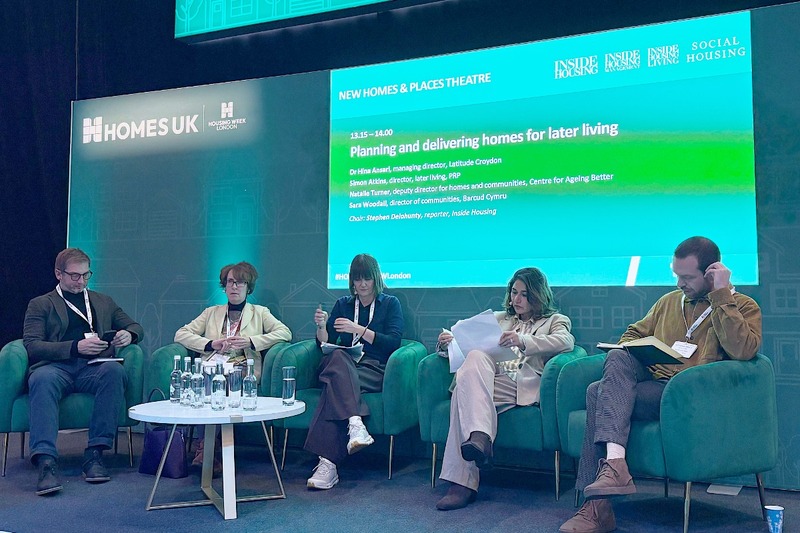 Later-living developers can “take a lot” from the design of the build-to-rent and purpose-built student accommodation sectors, an architect has said
Simon Atkins, director of later living at architecture firm PRP, made the comments while speaking at the HOMES UK 2026 conference in London on Tuesday.
Mr Atkins, a chartered architect, told delegates that later living could “take a lot from” BTR and PBSA, including lessons around making buildings efficient, keeping a sense of independence and “not losing that sense of community”.
He said later living schemes should be provided within a community, so that residents have access to a supermarket, gym, hairdressers and other vital facilities. This can be economical and “brings affordability”, he said.
Read more


Dr Hina Ansari, managing director of Latitude Croydon, a provider of accessible accommodation in London, was also on the panel. She responded to a question from Inside Housing Living on whether there was demand for older people renting suitable housing.
Dr Ansari said: “The suitability is usually an older person [and] some of them are in critical care; they won’t be necessarily at a home that is adapted.
“But... what we’ve noticed is, as people get older, the homes that are suitable for older people are getting far [fewer]. So these individuals end up in care homes, not necessarily because they all need public care homes, but just because there’s nothing available.”
Dr Ansari added that there was “huge demand” for homes with adaptations for older people, such as step-free access, larger bedrooms and wider corridors.
On whether there was investor appetite for later living operating through a rental model, Dr Ansari responded that she did not “think there is”.
She said: “The investor appetite goes into care homes [and] it goes into nursing homes. Why? Because there’s a larger margin of profits there.”
Earlier this month, Inside Housing Living analysed a new report on the estimated target returns investors expect from each tenure in the living sector. Later living for rent emerged as the lowest-risk tenure, as seen by investors, with expected returns of 6.7%. This is lower even than the indicative returns of social housing, where rents are fixed by the government.
Also this month, the government promised to set out a roadmap for older people’s housing next year. Ministers agreed with the analysis of the Older People’s Housing Taskforce, which was commissioned by the previous Conservative government and which found that the UK needs between 30,000 and 50,000 new later living homes a year. Currently, only 7,000 are built.
Are you subscribed to Inside Housing Living?
Inside Housing Living brings you exclusive analysis and big deals from the wider residential market, including build-to-rent, student living, later living, for-profit registered providers and more. Not subscribed yet?
Related stories