You are viewing 1 of your 1 free articles
‘Years in the making’: L&G Affordable Homes reveals how it won top regulatory grades
Shaun Holdcroft speaks to James Riding about how Legal & General (L&G) Affordable Homes won top marks from the Regulator of Social Housing for the consumer, financial viability and governance standards


 ‘Years in the making’: L&G Affordable Homes reveals how it won top regulatory grades #UKhousing #UKlivingShaun Holdcroft speaks to James Riding about how L&G Affordable Homes won top consumer, financial viability and governance marks from the Regulator of Social Housing #UKhousing #UKliving
Shaun Holdcroft, head of affordable housing at L&G, tells Inside Housing Living that 9,000-home L&G Affordable Homes’ (LGAH) first C1 grade had been “years in the making”.
He says the process started in 2019 when LGAH began building its own Salesforce-based technology platform called My Brolly, which allows the landlord “granularity of insight” on repairs and complaints.
This is especially important when you have an outsourced model, Mr Holdcroft says. LGAH contracts the management of its affordable homes to companies including Pinnacle Group and housing associations Great Places Housing Group and Flagship, all of which use the My Brolly platform.
Read more
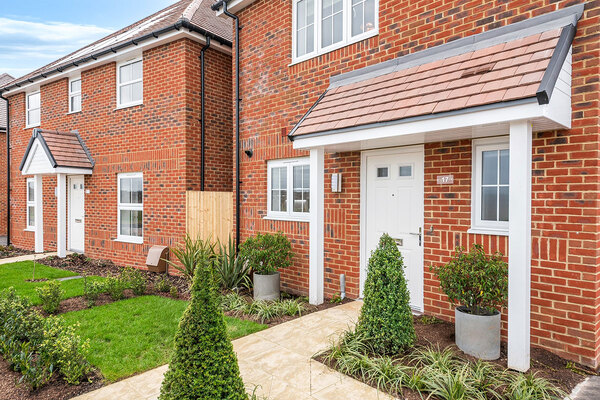

My Brolly helps to connect residents with different parts of the business and these external management companies. For example, if a resident moves into a new property and reports an issue, the system will work out if this is a management issue or a defects issue for the developer to resolve and navigate to the correct supplier.
On the relationships with management companies, Mr Holdcroft says some of these partnerships are now “longstanding” at over five years old.
All of LGAH’s homes are floored and decorated to be “liveable from the day you move in”, even on relet and resale, he says. “That means we rely on management partners.”
‘An active manager and owner’
LGAH has also procured its management partners to provide an outreach service to its most vulnerable residents. Staff from the management companies signpost residents to services such as mental health support, bereavement support and childcare, and ensure take-up occurs.
“We never will be a silent partner,” Mr Holdcroft says. “We always wanted to be the name above the door – an active manager and owner.”
Management is “core and it’s crucial” to the business, he adds.
The organisation also directly employs a team of staff to deal with higher-order complaints and resident engagement. External management company staff would be the “first line”, handling stage-one complaints, although LGAH staff “review everything”.
Staff would then “step in” on stage-two complaints and “handle the case at that point”. They also “proactively manage” relations with the Housing Ombudsman, Mr Holdcroft says.
In its regulatory judgement, the Regulator of Social Housing said all seven of LGAH’s for-profit registered providers have “accurate, up-to-date and evidenced” understanding of the condition of its homes, an effective repairs service and the financial capacity “to deal with a wide range of adverse scenarios”.
The boards of all seven registered landlords hold joint board meetings and share the same board members. “From a governance and consumer perspective, we do everything we can to ensure there’s consistency of practice,” Mr Holdcroft says.
He says that the different registered providers have different investors, different capital stacks and different attitudes to risk, but adds: “There is no circumstance in which it is acceptable for a customer to have a different standard of service just because we’re moving homes between vehicles.”
The G1 governance rating shows that LGAH has put in place structures to safeguard its social homes, Mr Holdcroft says. “Any structure needs to have some sort of ringfencing arrangement around it” that ensures a parent, shareholder or investor is not able to make the registered provider or its board act in a way that places its social housing assets at risk.
Overarching agreements between the different entities are also “really important”, he says, “to ensure those businesses and their strategies are aligned with the regulatory standards”.
“We’re delighted with the validation of the model we’ve built, but the thing it allows us to do is go on and do a heck of a lot more”
On the C1 consumer rating, Mr Holdcroft says: “There is generally a feeling in the sector that the consumer standards works best for organisations that are more regionally concentrated.”
To achieve the C1, LGAH showed it “can demonstrate a real connection with its customer base”, he says. The boards of the registered providers have a “real insight of what’s going on” in customer service, he adds.
He also says that LGAH was able to demonstrate to the English regulator that is showed “thoughtfulness” in its core business processes. “Our affordable rents are [an average of] 68% of market rents”, showing that “we are careful about selecting schemes that are affordable” to residents, he says.
Mr Holdcroft adds: “We’re delighted with the validation of the model we’ve built, but the thing it allows us to do is go on and do a heck of a lot more.”
Earlier this week, L&G launched a new for-profit affordable housing partnership with London housing association Hyde Group.
Under the partnership, Hyde will transfer 1,000 of its existing homes to Halesworth and Lanecroft Homes, two for-profit registered providers jointly owned by Hyde and L&G.
The stock transfer is seen as the first tranche of a new long-term joint venture between the housing association and asset manager to build new homes and invest in existing homes requiring green retrofitting.
In December, Sparrow Shared Ownership, another for-profit housing provider, was awarded the highest grades by the Regulator of Social Housing.
Sign up to our weekly Living newsletter
Sign up to Inside Housing Living’s newsletter, bringing you exclusive analysis and big deals from the wider residential market, including build-to-rent, student living, later living, for-profit registered providers and more.
Click here to register and receive the Living newsletter straight to your inbox.
And subscribe to Inside Housing Living by clicking here.
Already have an account? Click here to manage your newsletters.
Related stories