You are viewing 1 of your 1 free articles
Thriving Investments’ Cath Webster sets out expansion plans
Thriving Investments, the investment manager owned by Places for People, is focusing on homes for essential workers as it scales its regional housing funds. Denise Chevin meets its chief executive, Cath Webster


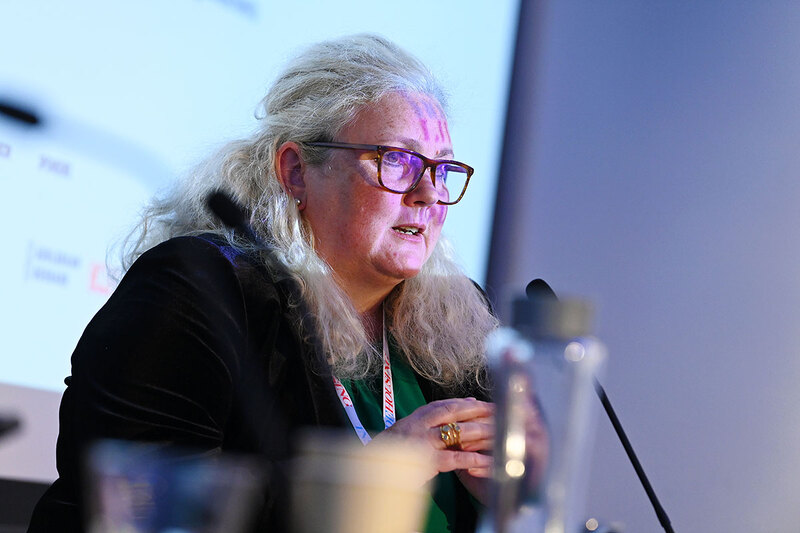 Investor interview: Thriving Investments’ Cath Webster sets out expansion plans #UKhousing
Thriving Investments
- Sectors: Private sale, private rent, discounted rent (mid-market rent in Scotland), shared ownership
- Assets: More than 5,000 homes
- Asset value: £1.1bn
Thriving Investments has grown quietly into a national residential investment manager, assembling four multi-tenure investment strategies that together hold more than 5,000 homes in long-term ownership.
It has a bigger target in mind: 20,000 homes by 2034. And to get to that figure, the investor – a subsidiary of the housing association Places for People – intends to step up investment this year. Its target market? Lower-earning workers who are locked out of social housing and often unable to buy or rent on the open market.
For chief executive Cath Webster, the challenge to expansion is building confidence among the institutional players that have ploughed £1.1bn into its investment strategies.
Read more


“We have to bring institutional investors on a journey,” she explains. “They don’t jump straight into affordable housing. Most start with student accommodation – which we don’t do – then move through market sale and market rent before moving into the affordable tenures.”
That pathway is reflected in Thriving Investments’ operating model, which targets “economically active” residents. The company runs four investment strands.
Its urban regeneration strategy with Igloo, a developer and investor that is also owned by Places for People, targets market sale and has a pipeline of 3,000 homes.
It has a joint venture with the Universities Superannuation Scheme called Picture Living, which invests in single-family (suburban) private rent homes.
It invests in discounted and mid-market rent via New Avenue Living and other partners.
“Residential is stable, long-term income – exactly what pension funds want”
Finally, it invests in shared ownership through a fund managed by Gresham House and for-profit provider ReSI Homes. Investors include local authority pension schemes keen to support housing in their regions.
Ms Webster says discounted market rent is often the most attractive tenure because it is unregulated, as well as offering a high social impact, which investors are often looking for. “The more regulated the tenure, the more reputational risk there is if you get it wrong,” she notes.
While institutional investors remain cautious on shared ownership, and some fund managers avoid it, Ms Webster calls it central to Thriving Investments’ model.
“It’s an excellent route into ownership for average earners,” she says. “By our calculations, it opens the market to another 8.2 million households. Sales remain strong, even as market sales decline.”
Regionally deployed capital
Thriving Investments’ most mature vehicle is its Scottish mid-market rent fund, now fully deployed with around 1,200 homes across the central belt, renting at about 70% of market prices.
In England, the company is building out a pipeline of discount market rent homes with a Greater Manchester fund backed by pension funds from across the region, called New Avenue Living – Greater Manchester. This launched in 2025 and is aiming to add more than 1,000 homes. The first 150-home development is under offer and further acquisitions are progressing.
“We then have around 2,000 market rented homes and 2,000 in shared ownership,” Ms Webster says.
Looking to this year, Ms Webster is targeting £150m to £250m of capital deployment across all tenures, including a second Scottish fund under consideration. “Demand isn’t the constraint – funding capacity is,” she explains.

One headwind to battle with is relatively high gilt yields (essentially the interest rate of UK government bonds). Currently, these bonds offer pension funds strong risk-free returns compared to investing in bricks and mortar, with all the risk that entails. As a result, high gilt yields are a factor in slowing overseas investment.
“If gilt rates are high, housing has to work harder,” Ms Webster says.
In her view, the sector nevertheless remains attractive: “Residential is stable, long-term income – exactly what pension funds want.”
Acquisition strategy: no planning risk
Thriving Investments avoids early-stage risk by buying developments that have already received planning permission. It typically enters schemes at a specific milestone in construction, usually when the walls start to come up, referred to as the ‘golden brick’ stage, which allows purchase of new homes without having to pay VAT. The company forward-funds properties through to completion and takes full ownership.
While viability pressures are hitting builders, Ms Webster says the current market can create opportunity for investors. “There are deals available, but supply will dry up if viability issues continue, as we’re already seeing in London.”
Some acquisitions include Section 106 homes, but Thriving Investments often goes further. “We’ll convert market sale into shared ownership or discounted rent – sometimes entire blocks, so we’re not just taking a 25% stake.”
The company works with many house builders, with some funds focused specifically on regional SMEs, which Ms Webster says are the ones experiencing the most difficulties.
Thriving Investments specifies build standards when buying from house builders to ensure durability. The landlord only buys homes with an Energy Performance Certificate A or B rating, in areas with good transport links. Once Thriving Investments owns the homes, they are managed by Touchstone, another subsidiary of Places for People.
An ever-growing demand for homes among ‘essential workers’ more or less guarantees that Thriving Investments’ assets won’t lie empty. The biggest risk, Ms Webster says, is political intervention. “Governments can change the market overnight. We saw it with Scottish rent caps, and investment disappeared. What we need is certainty.”
The investor interview series
Man Group’s Shamez Alibhai on the shift to direct development
Man Group’s Community Housing Fund, which wants to double its portfolio and get involved in projects at an earlier stage. Managing director Shamez Alibhai sits down with Denise Chevin to explain why
How Octopus Capital’s Jack Burnham plans to reach 1,000 homes – then double it
After raising its first tranche of overseas investment, Octopus Capital is confident of scaling up and building more homes with zero energy bills. Denise Chevin speaks to head of affordable housing Jack Burnham to find out more
Thriving Investments’ Cath Webster sets out expansion plans
Thriving Investments, the investment manager owned by Places for People, is focusing on homes for essential workers as it scales its regional housing funds. Denise Chevin meets its chief executive, Cath Webster
Venn’s managing director Oriane Auzanneau on backing build-to-rent with government guarantees
Venn’s managing director Oriane Auzanneau tells Denise Chevin how government guarantees are reshaping housing finance and building investor confidence
Sign up to our weekly Living newsletter
Inside Housing Living brings you exclusive analysis and big deals from the wider residential market, including build-to-rent, student living, later living, for-profit registered providers and more.
Already have an account? Click here to manage your newsletters.
Related stories