You are viewing 1 of your 1 free articles
Get Living boss Rick de Blaby on ‘squeaky tight’ viability and Olympic Village legal action
James Riding meets outgoing chief executive Rick de Blaby to find out if developer Get Living’s new project marks the end of an era for build-to-rent development


 Get Living boss Rick de Blaby on ‘squeaky tight’ viability and Olympic Village legal action #UKhousingJames Riding meets outgoing chief executive Rick de Blaby to find out if developer Get Living’s new project marks the end of an era for build-to-rent development #UKhousing
I wasn’t expecting my tour around Get Living’s latest development to feel like the end of an era.
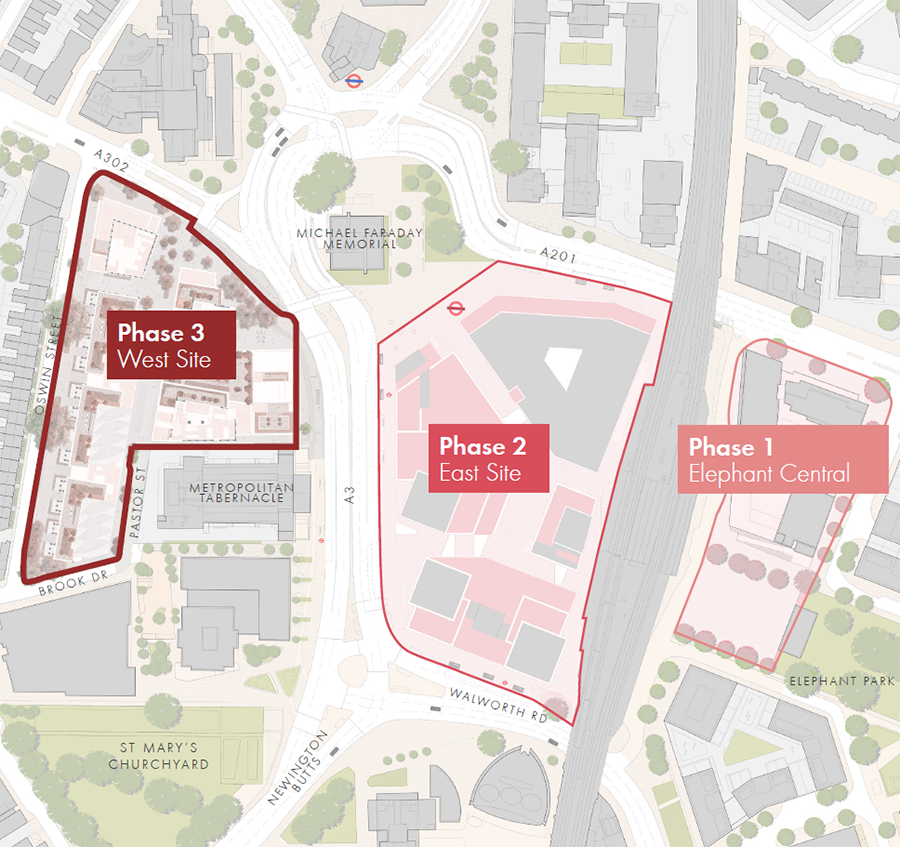
The top team at the build-to-rent (BTR) landlord escorts me around The Elephant, soon to be a new landmark of south London with 485 homes, including 172 affordable, plus a gym, lounges and rooftop garden for residents.
It stands on the site of the 1960s Elephant and Castle shopping centre, which was demolished in 2021 after decades of uncertainty and debate – although the famous pink elephant was salvaged and given a new perch.
In a nod to the site’s history, the homes are built around a new retail square and upmarket cinema. Get Living hopes that millions of commuters and tourists will walk straight through the scheme every year as they cross from the Thameslink to Elephant and Castle underground station.
The Elephant also includes a new university campus for the London College of Communication (LCC), a college of the University of the Arts London. Its three new housing blocks positively dwarf the old LCC building next door, which Get Living will demolish and redevelop into student and build-to-rent housing once the university has moved to the new campus in 2028.
Read more

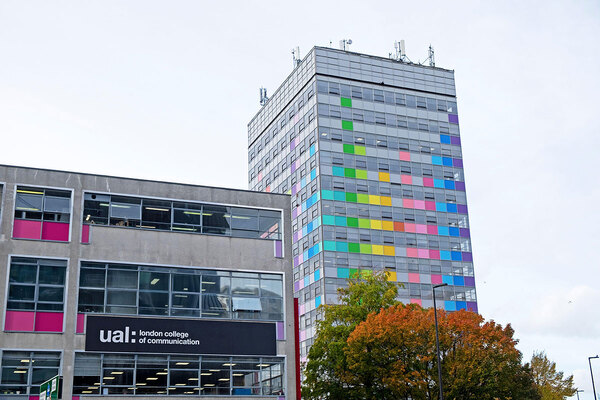

But would it be possible to embark on a BTR development of this scale in today’s economic climate?
“I don’t think we would be able to do anything like this anymore,” Dan Greenslade, chief financial officer at Get Living, says flatly.
Rick de Blaby, the landlord’s outgoing chief executive, is more reserved. “The viability of something like this would be squeaky tight. If you were starting from scratch, it’s really hard,” but if you’ve got scale, “development can, at the margins, add a bit of sizzle to your core return”, he says.
Inside Housing Living approached Mr de Blaby for an interview to look back on his nine years at Get Living ahead of his departure later this year. Recruitment for his successor is underway.
Our conversation ended up much broader than that, as he reflected on the crisis of confidence facing the BTR sector. Finally, he gave the most detailed picture yet of Get Living’s ongoing legal battle over fire safety costs at the former Olympic Village in east London, and his message to the residents who are still waiting for their homes to be fixed.
Mr de Blaby will step down from Get Living once his successor has been secured. He leaves the company as the UK’s third-largest BTR landlord by operational homes, after Grainger and Legal & General. Its 5,500 homes are spread across London, Salford, Birmingham, Maidenhead and Surrey, but Elephant and Castle is the jewel in the crown.
There are spectacular views of the Shard and the City of London, the London Eye and the Palace of Westminster from the roof terrace of the residential towers, with tiny Thameslink trains snaking past. Construction of The Elephant is almost complete, with residents set to move in this summer and retailers opening their doors in the autumn.
Get Living is midway through a planned trilogy of developments here. Phase one, Elephant Central, launched in 2017 with 374 BTR homes and 278 student beds, and is 95% occupied. We tour phase two, The Elephant, which is opening in 2026.
Phase three, The Elephant West, will be built on the site of the former LCC campus, with 452 student beds, 342 build-to-rent homes and 165 affordable homes. Southwark Council approved Get Living’s plans for phase three on 23 March.
State of build-to-rent
Despite all this growth, the health of the wider BTR sector looks precarious. In a shock announcement last month, retailer John Lewis abandoned its BTR development plans, citing a shift in economic conditions over the past five years. BTR construction starts slumped to 6,000 in 2025, down 77% compared with 2022.
Mr de Blaby has been a key participant in UK BTR from its infancy. Did he expect the sub-sector would be bigger now than it is?
“Probably, yeah,” he says.
The Covid pandemic caused delays. Higher UK government borrowing costs after September 2022 shrank investor appetite for development. Brexit was another influence, he says, because it drove workforce shortages and pushed up cost inflation.
“Against all of that, we know that people want more housing. We know that there’s a greater trend to rent their homes,” he says.
“I think we’re doing what we set out to do. I just wish we could be bigger and better, because the bigger we are, the more economy of scale we can feed through into that resident experience.”
Delancey, British developer Jamie Ritblat’s property company, is the convening force behind Get Living, but it has always been an international partnership. It was set up in 2013 by a Delancey client fund and Qatar’s sovereign wealth fund, which won a joint bid to buy the former 2012 Olympic athletes’ village in Stratford. This became East Village, Get Living’s first scheme.
Meanwhile, in south London, Delancey and Dutch asset manager APG bought into Elephant Central, which became 367 BTR homes (right next to The Elephant). Delancey then put the funds and investors together to form a multifamily private rented sector platform.

From 2017, when Mr de Blaby joined the business from United House Group, Get Living evolved from a lettings and management company into an asset manager and commercial landlord.
In 2018, Canadian pension fund Oxford Properties co-invested £600m in the business with Delancey, at which point Mr de Blaby says “we were a proper company with a balance sheet”.
Five years later, Qatari Diar’s 22% stake was bought out by Aware Super, an Australian pension fund. (APG still owns 39%, while the remaining 39% is shared by Oxford Properties, Delancey client funds, Alecta, Allianz and LPPI.)
This fleet of global backers means the boss has plenty to say about attracting international investment.
“If the build-to-rent sector wants to get to anything like the size it really should – it’s less than 2% of the housing stock at the moment, but it has the right to be, I would say, 15% of the stock – Savills quoted the fact you need something like £200bn of capital to do that,” he says.
“Well, we have about £3bn of it. Grainger have about £3bn of it. Quintain have a bit similar. I mean, you’ve got a long way to go.”
“If we want to do single-family housing, we’ll do it through a different platform”
Why has progress been so slow?
“I think the UK’s proposition to those global investors diminished a little bit,” Mr de Blaby says, due to the accretion of planning delays, the Building Safety Regulator, double-staircase rules, scarcity of construction resources and the Renters’ Rights Act.
“When they’re in aggregate… you get to a place where it’s quite hard to make the sums work. If you’re the CIO of any of those global pension funds… they themselves are under huge pressure to deliver returns for those pension fund custodians that they’re in charge of. And these guys can choose any sector, any geography, any platform.”
Even within BTR, Mr Greenslade notes, the money is moving away from high-rise multifamily schemes and towards houses in the suburbs, because “it’s seen as a bit easier”.

Get Living won’t be moving into single-family rentals any time soon, though.
“We did look at it,” Mr de Blaby says, “but if you look at it through the lens of our shareholders, they go, ‘Look, stick to your knitting, what you’re really good at’. If we want to do single-family housing, we’ll do it through a different platform.”
For now, the plan is to build the third phase of Elephant and Castle in 2028, when LCC relocates to its new campus at The Elephant, and potentially develop a plot at East Village that has consent for 850 homes.
“We have [those] two that we could switch on, and then we’ll see what opportunities come up,” Mr de Blaby says.
East Village – Get Living’s side of the story
As Get Living progresses with its new developments, a big fire remediation job is hanging over it.
‘Buyer beware’ is the bitter lesson of East Village for Get Living. The 2,800-home development is now something of a monument to fatally lax pre-Grenfell construction laws.
The government built the athlete’s village for the 2012 Olympics and sold it to Delancey and Qatari Diar after the Games. From 2020, serious fire safety defects were slowly uncovered, leading to a prolonged dispute over who should pay the bill.
Get Living is the freeholder of East Village, while East Village Management Limited (EVML), the company responsible for fire safety and managing the common areas of the scheme, has a 999-year lease. EVML is owned jointly by Get Living, Triathlon Homes (the housing association that operates the affordable housing in East Village) and leaseholders who have staircased their shared ownership homes to full ownership.
“If you go back to that era when everybody was building… you can see how it happened. But that doesn’t excuse it”
EVML has estimated that the bill to fix all 63 buildings will come to £432m. Get Living booked a £135m loss in 2024 as it set aside the cash to fix the development.
It is fine to complain about delays at the Building Safety Regulator, but doesn’t the stupendous cost to retrofit East Village demonstrate that the regulations had to change?
“The construction sector got away with a lot. If you go back to that era when everybody was building, there was a shortage of materials, everyone was under time pressures, you can see how it happened. But that doesn’t excuse it,” says Mr de Blaby.
Years of legal wrangling have meant there is still no conclusion on who – between Get Living, Triathlon Homes and the government – should foot the bill for East Village. All agree it shouldn’t be the shared ownership leaseholders, and Get Living reasonably points out that it did not design or build the blocks.
Triathlon’s lawyers point out that Delancy and Qatari Diar bought the Olympic village's original development company. Plus, they argue, why should the taxpayer stump up when Get Living is “fatly capitalised” with assets of more than £2.6bn?
The Building Safety Act, which came into force in 2023, “effectively said that the freeholder is liable retrospectively”, Mr de Blaby says.
“If you looked at it through Triathlon’s lens, they were sitting there going, ‘Right, that’s never going to be service-chargeable, and we can have remediation done to the level that we like, at no cost to ourselves’.”
Get Living “had a fiduciary duty to challenge” the Building Safety Act, he says.
“If you are any of those pension funds from a different country… I think you’re entitled to say to government, ‘Well, hang on a minute. I want to invest in the UK, and I want to help you build more homes, but you’re slogging us with a bill for something we had absolutely no hand in’. And in the case of East Village, of course, the world knows it was the government that built it.”
Earlier tribunal rulings came down on Triathlon’s side, but the Supreme Court has allowed Get Living permission to appeal on one ground: whether the ‘retrospectivity’ of the fire safety bill renders it invalid.
Mr De Blaby argues that the fault lies with the contractors who arguably “didn’t build it to the standard of the drawings that the government had produced”.
Get Living says it is pursuing litigation against the original contractors and suppliers of East Village, with letters of claim out to 22 targets. However, it says it cannot put in particulars of claim until it can specify the scope of the remediation – which means the dispute with Triathlon must be resolved first.
Wall problems and numbers dispute
Post-Grenfell remediation projects initially focused on flammable aluminium composite cladding, some of which was found at East Village and removed by Get Living. Gradually, though, it became clear that the scheme had much deeper problems with its cavity barriers and internal walls.
Get Living has disputed EVML’s figure of £432m to fix all 63 buildings.
“If you just look at that bill and you divide it by the number of homes, you might as well knock the thing down and start again. It’s completely bonkers,” says Mr de Blaby.
That £430m figure assumes walls will have to be knocked down, he argues.
“We did say we’d quite like conduct of it [the remediation], if it’s our money and we’re doing it. And it’s not been accepted”
“You can ultrasound these walls, and you can see through them, and you can do keyhole surgery, a bit like we would in a medical environment, and you can go in and just work out where the issue is and fix it without having to move people out,” he says.
“That’s not quite half the cost, but it’s a lot less than having to knock the whole thing down.”
Get Living estimates it can do the remediation for £60m less, Mr Greenslade says. Even so, that is still an “enormous” £370m bill, the chief financial officer admits.
In 2022, the government sponsored the creation of a remediation standard for external walls called PAS 9980, which aims to identify where the risk is ‘tolerable’ and where remediation is necessary to protect lives.
“We said we’d do it, at our cost, to that PAS 9980 standard. We did say we’d quite like conduct of it, if it’s our money and we’re doing it. And it’s not been accepted. So no one can sit there and say we’re trying to slide out of this,” Mr de Blaby says.
Get Living wants to remediate East Village’s outer walls to PAS 9980; Triathlon is arguing that the standard should be led by independent fire safety experts.
“If they can have a higher standard, they’ll go for it, because they’re not paying for it,” Mr de Blaby says.
EVML has taken legal action against Get Living for a site-wide fire safety bill, known as a remediation contribution order. This is due to go to tribunal, with a case management hearing this summer. As part of the tribunal, three independent experts are required to come up with a joint statement on what level of remediation is proportionate.
“We suspect those three experts will agree on 90% of what scope is applicable, and there might be shades of grey around 10%. I think we could all sit down and work that out before it needs to go to a tribunal,” Mr de Blaby says.
He thinks that, “if you’ve got three experts that have written a joint statement saying how it can be done, and it’s gone through a Building Safety Regulator Gateway 2 process, and you’ve got a bunch of fire engineers that tell you it’s OK”, then EVML, the company responsible for fire safety, “should be able to sleep at night and go, ‘Yeah, that’s the answer’”.
However, Mr de Blaby added that Get Living and Triathlon are “working collaboratively to find a solution to this complex problem as soon as possible”.
Triathlon’s response
A spokesperson for Triathlon Homes said: “Our focus is, and has always been, resident safety. Residents have endured uncertainty for far too long.
“Our hope is that a programme of remedial work, one led by fire safety experts, can be delivered promptly and without lengthy litigation.
“Residents need this resolved, which is why we, and all our partners at East Village, are working at pace and in good faith.”
So, what is Mr de Blaby’s message for the residents of East Village, who are still waiting for their homes to be fixed – and for the shared owners, who are unable to sell?
“I have every sympathy for their situation,” he says.
“They didn’t deserve it. They shouldn’t be paying the service charge for it. They’re not. And they’ve got these two parties that should be sorting themselves out. I totally get it.
“We’ve made the open offer. We’re doing our best to sort it.”
Sign up to our weekly Living newsletter
Inside Housing Living brings you exclusive analysis and big deals from the wider residential market, including build-to-rent, student living, later living, for-profit registered providers and more.
Already have an account? Click here to manage your newsletters.
Related stories