You are viewing 1 of your 1 free articles
The John Lewis Partnership has said it is withdrawing from its build-to-rent property business, citing a shift in economic conditions since it launched the venture in 2020.

The group said it was pulling the plug on its residential business to refocus on its core retail brands, John Lewis and Waitrose.
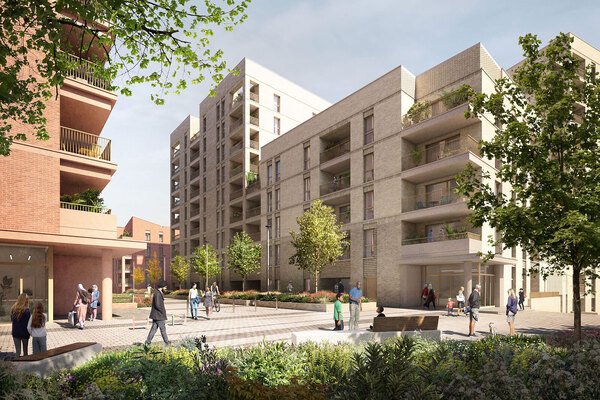
John Lewis’ build-to-rent platform was led by Katherine Russell and had secured planning consents for around 1,000 homes in London and Berkshire, including schemes in West Ealing, Bromley and Reading.
The Bromley scheme was the local authority’s first build-to-rent consent and would have been the tallest building in the borough.
John Lewis had also amassed an operating portfolio of 1,000 homes. It took on management of four Aberdeen-owned buildings in Leeds, Leicester, Birmingham and Stratford, previously managed by JLL.
The retailer said it will fulfil its existing management contracts at all four sites as part of its transition out of the business.
In its most recent accounts, BTR (Operating) Limited, the operating company for the John Lewis Partnership’s build-to-rent sites, reported a post-tax loss of £280,000 over the 12 months to January 2025.
John Lewis noted that the build-to-rent sector has come under “sustained viability pressure” in recent years as rising interest rates have pushed up borrowing costs for developers.
Construction cost inflation stood at 4.4% as of October 2025, while labour costs are up 7.1% year-on-year, according to the Building Cost Information Service.
The retailer also cited data from Molior, the British Property Federation and Savills, which found that annual build-to-rent absorption in London has fallen 72% since 2022, from 7,744 homes to 2,190.
It said that the forward-funding model, the traditional mechanism for financing large build-to-rent schemes, has “effectively ceased” in London, while the Renters’ Rights Act, which takes effect on 1 May, has “added a further layer of uncertainty” for institutional investors.
A John Lewis Partnership spokesperson said: “Our rental property ambition was based on a very different financial environment: one with more stable investment returns, lower borrowing costs and more affordable costs to build homes.
“Unfortunately, the current climate – higher interest rates, inflationary pressures and a more cautious property market – has meant the model no longer meets the partnership’s investment criteria.”
The spokesperson added: “We’re proud of what we’ve achieved in terms of progress with three planning applications and managing third-party build-to-rent homes for residents to a high standard.”
John Lewis announced its move into the build-to-rent market in 2020. It pledged to invest £500m in rental homes via a partnership with investment giant Aberdeen to build 1,000 homes by redeveloping its department store sites.
Sharon White, chair of the retailer at the time, said her aim was to generate 40% of John Lewis’ profits from housing by 2030.
Brendan Geraghty, chief executive of the Association for Rental Living, said: “This is deeply disappointing news and a real loss for consumers.”
He continued: “What has made this venture unworkable is a set of conditions entirely outside its control: borrowing costs that have roughly doubled since 2021, construction cost inflation that continues to outstrip general prices, an unwieldy planning system that has added years to delivery timescales, and the introduction of legislation – the Building Safety Act and particularly the Renters’ Rights Act – that has made it materially harder for investors to underwrite the predictable income growth that rental housing requires.”
Mr Geraghty added: “When a brand as well-known and well-resourced as John Lewis concludes that the economics no longer work, ministers need to sit up and think very carefully about how they respond.”
Sign up to Inside Housing Living’s newsletter, bringing you exclusive analysis and big deals from the wider residential market, including build-to-rent, student living, later living, for-profit registered providers and more.
Click here to register and receive the Living newsletter straight to your inbox.
And subscribe to Inside Housing Living by clicking here.
Already have an account? Click here to manage your newsletters.
Related stories