You are viewing 1 of your 1 free articles
Report finds investment in data and digital systems is ‘pivotal’ to build landlords’ capacity and resilience
A new report warns that poor data and fragmented systems threaten social landlords’ ability to withstand tougher regulation and rising costs, and urges them to invest in information systems as a strategic asset.


 A new report warns that poor data and fragmented systems threaten social landlords’ ability to withstand tougher regulation and rising costs, and urges them to invest in information systems as a strategic asset #UKhousing
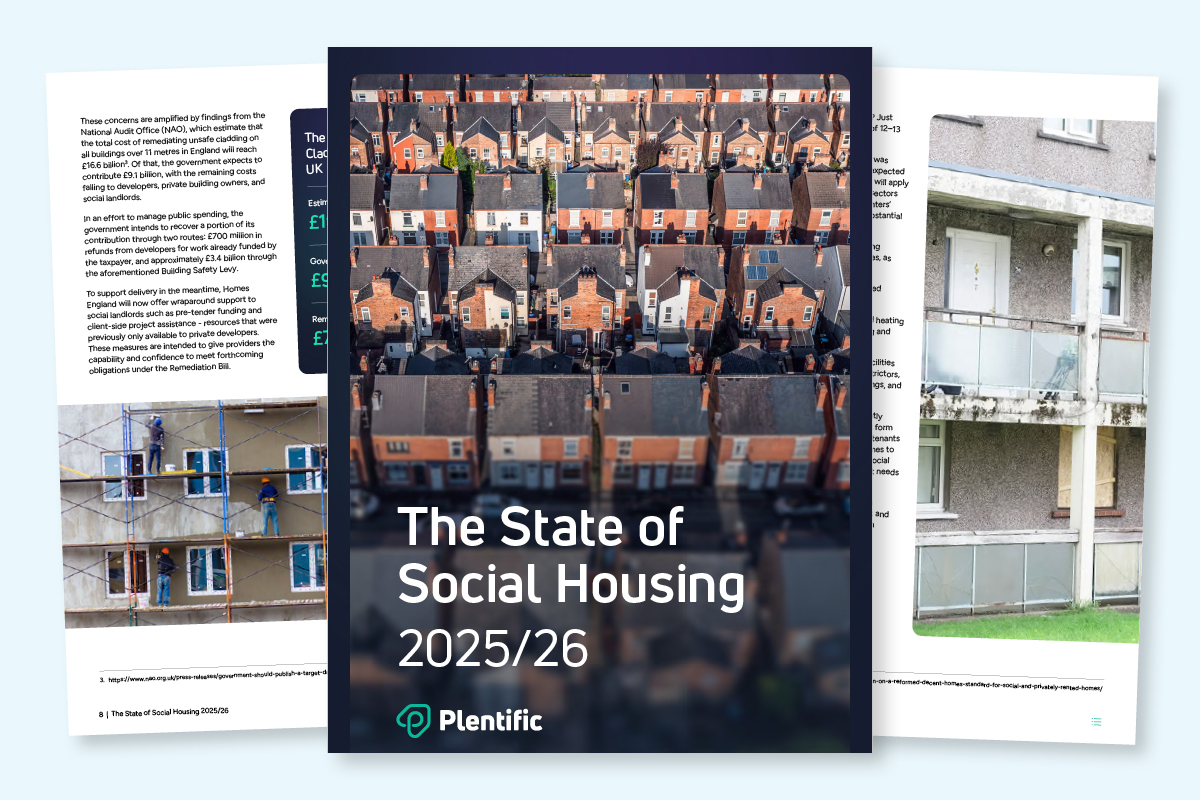
Proptech platform Plentific has published its State of Social Housing 2025/26 report, which describes a sector at a pivotal moment, balancing unprecedented government funding with mounting regulatory pressures.
It comes amid a new £39bn Social and Affordable Homes Programme and a new National Housing Bank with £16bn of lending power.
But the report, launched at the Housing Community Summit in Liverpool this week, argues that money alone will not enable landlords to build the capability and resilience to deliver safe and decent homes.
At the heart of this concern is information management, an often-cited weak spot for the sector.
Poor data and fragmented systems are repeatedly highlighted as root causes of service failures and compliance breaches.
Inside Housing’s own analysis of ombudsman data found maladministration cases linked to data management rose 17% last year, from 321 in 2023-24, to 376 in 2024-25. The ombudsman’s 2023 Spotlight report described poor record-keeping as “ubiquitous” and a daily detriment to residents.
A follow-up review this summer found improvements among landlords that had changed systems, but barriers such as weak information quality and cultural resistance remain.
Richard Blakeway, the housing ombudsman, has emphasised the need for good information management, as it is now central to the new consumer regulation. Investment in this area delivers both incremental gains and longer-term benefits, he said.
Plentific warns that meeting new rules will be almost impossible without integrated systems and reliable audit trails.
From October, Awaab’s Law will require landlords to investigate damp and mould within 10 days, share findings with tenants within three, and act within 24 hours in emergencies.
The reformed Decent Homes Standard (DHS), due between 2035 and 2037, will demand condition-based rather than age-based assessments, and proactive damp and mould management.
For Plentific, a managerial belief that work has been completed will not cut it. Landlords need to replace what it describes as fragmented, haphazard spreadsheets and portals with a single “point of truth”.
The report highlights benefits beyond compliance, which would build on each other. Better information management can improve efficiency and resilience.
Plentific believes staff are wasting time maintaining spreadsheets or developing workarounds because core systems do not fit their needs. Landlords that invest in systems linking housing management, contractor databases and customer records give boards and staff a clearer picture of current needs.
On investment capacity, it urges landlords to use the new funding available in a way that balances growth with tenant affordability. Plans must also account for a predicted 30% rise in labour costs by 2030 and a 16% rise in materials costs.
Elly Hoult, chief operating officer of housing association Peabody and president of the Chartered Institute of Housing, said: “Reading this report, it’s clear how much promise and pressure sit side by side.
“New funding and the long-term rent settlement are significant, but the weight of regulation and rising costs means delivery will still be tough. What resonates most is the focus on culture, data and professionalism.
“Getting those right is the only way this investment and policy change will translate into better outcomes for residents.”
On organisational capability, the report calls for stronger leadership and culture. It suggests top-down approaches to embedding empathy and respect for tenants, alongside better training and contractor support.
And while the government has promised 60,000 extra construction workers, landlords must still strengthen their own workforces to avoid bottlenecks.
For systems and intelligence, the report finds that landlords which embed reliable data systems, predictive analytics, automation and orchestration can stay compliant without necessarily hiring more staff. Strong systems enable proactive services, faster compliance and clearer accountability, and help prevent landlords from being overwhelmed by regulation, complaints and safety work.
According to the findings, a better use of technology is not only essential for compliance, but also a way to build capacity in a sector under strain.
Automation can help landlords generate tenant updates within the mandated three days under Awaab’s Law, while predictive analytics can identify homes at greatest risk of damp and mould.
Earlier this year, a senior sector leader said AI will be needed to make the legislation effective for his housing association when it comes into force this autumn.
Platforms that integrate housing management systems, contractor databases and customer-contact tools are described as offering “a single pane of glass” for boards and executives.
Nick Atkin, chief executive of housing association Yorkshire Housing, told the report’s authors: “Reliable, real-time data is the core ingredient of a great service. Together with AI, this is helping us move from reacting to problems, to anticipating them.”
The report concludes that investment in bricks and mortar will not be enough to meet rising expectations. Without equal focus on data and digital capacity, landlords risk undermining tenant safety, breaching regulatory standards and losing the trust of the residents they serve.
Cem Savas, chief executive of Plentific, said: “We believe delivering decent, safe homes where residents feel heard and respected is the outcome of four powerful forces working in concert: investment capacity, governance, organisational capability in terms of people and processes, as well as systems and intelligence, focusing on data and systems.
“In this evolving landscape, technology is emerging as the bridge between where we are and where we aspire to be as a sector, enabling housing providers to navigate these complexities, grow sustainably and truly deliver on the promise of safe, decent and respectful homes for all.”
Sign up for our asset management and sustainability newsletter

Already have an account? Click here to manage your newsletters
Related stories