You are viewing 1 of your 1 free articles
Knight Frank predicts boom in build-to-rent for older people
Knight Frank has predicted a boom in build-to-rent schemes for older people, as investors move away from leasehold-based retirement homes.


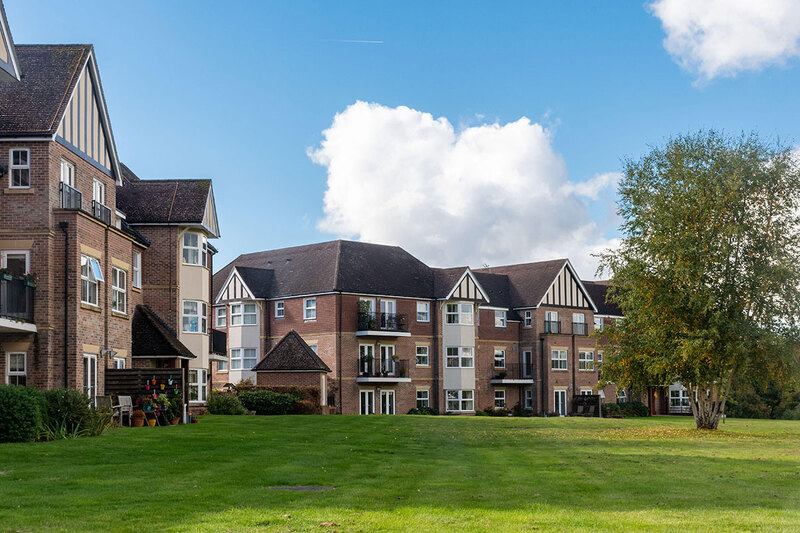 Property agency Knight Frank has predicted a boom in build-to-rent schemes for older people #UKhousing
The property agency has predicted that the number of build-to-rent schemes for older people in the UK will increase by 150% in the next five years, from 4,100 currently to more than 10,000 by 2029.
Build-to-rent remains small as a proportion of the overall later living market, which is dominated by homes for sale. However, the number of private rented later-living schemes is growing quickly.
Knight Frank’s living sector investor survey, which canvassed 56 institutional investors, found that 45% are planning to have exposure to senior rental housing by 2029, up from 32% currently.
Much of the senior housing market is based on selling homes for leasehold ownership. However, 62% of private operators now offer rental as an option while they shift towards a mixed-tenure model. In the more mature North American senior housing market, more than 90% of stock is rental.
The survey found that 21% of respondents currently invest in senior housing rental, either through high-end integrated retirement communities or mid-market retirement housing schemes. This proportion is expected to climb to 39% within five years.
Demand for retirement homes for rent is growing. Over the past decade, nearly 1.8 million renters in the UK have turned 65, at a rate of 177,000 a year.
There are approximately 500,000 seniors living in the private rented sector, often in unsuitable accommodation as they age. Meanwhile, 20% of care home residents are in good health but have no suitable alternative.
The agency also estimated that the current value of the senior housing sector stands at £44bn.
Tom Scaife, head of seniors housing at Knight Frank, said: “Capital is being raised for further business plans which will act as a catalyst to further investment, and management teams will continue their pivot from mixed tenure into seniors BTR [build-to-rent].
“High-quality partnerships of operators and developers each playing to their respective strengths will be key to platform expansion.”
He added: “We forecast an increase in investors from North America with larger ownerships and track records in the sector.
“With that, language around product may change: active adult, independent living and assisted living schemes will reflect the range of customer profiles, amenity and service propositions.”
Last month, Inside Housing spoke to CBRE’s heads of senior living and healthcare about why later living could shift to a private rented model.
Also in July, MPs quizzed large retirement developer McCarthy Stone, raising concern over reports that 59% of its leasehold properties lose value when resold, leading a number of owners to lose their life savings. The developer defended its resales process, adding that it wants to remove “friction and complexity” around selling its homes.
Separate to later living, Knight Frank’s wide-ranging survey identified trends in other institutionally funded sectors.
In an unconnected chapter on purpose-built student accommodation (PBSA), it identified an opportunity to retrofit older student homes, given 65% of existing PBSA in the UK was built before 2012.
Since 2012, almost 470,000 full-time university students have been enrolled into UK universities, yet no more than 260,000 new student beds have been delivered during that same period. This is equivalent to 65% of the existing PBSA supply in the UK, creating a two-tier market in terms of age and stock quality.
This has created an untapped opportunity in the PBSA market to drive value by upgrading and repositioning existing stock.
Collaboration between universities and the private sector will be essential as universities hold land, planning data and data around demographics and residential requirements to determine future housing requirements.
Since university finances are already stretched, insufficient or unsuitable accommodation could create a risk to reputation and student recruitment, the report added.
A total of £10bn was invested in the UK living sectors in 2024, Knight Frank said, up 2% from the previous year and accounting for 25% of overall real estate acquisition activity.
Drivers to the rise in investment included migration, urbanisation, ageing populations, increasing numbers of international and domestic students, and lifestyle choices.
Institutional investors plan to invest a further £45bn by 2029, with nearly half of them planning to increase their exposure to the living sectors by at least 80%.
Institutional investors have also spent £3.7bn on funding or acquiring single-family housing since the start of 2023, and 71% plan to invest in the sub-sector by 2029.
The biggest obstacle to growth in the living sectors, seen by investors, was construction and cost inflation at 81%, followed by planning issues at 60% and the higher interest rate environment at 45%.
The biggest short-term operational challenges for the market were rental affordability at 64%, potential new regulation at 57% and rising operational costs at 49%.
Sign up to our new Living newsletter

Sign up to Inside Housing’s new Living newsletter, bringing you exclusive analysis and big deals from the wider residential market, including build to rent, student living, later living, for-profit registered providers and more.
New to Inside Housing? Click here to register and receive our Living round-up straight to your inbox
Already have an account? Click here to manage your newsletters.
Related stories