You are viewing 1 of your 1 free articles
Developer Urban Splash ordered to repay £46.5m for fire safety works
Manchester developer Urban Splash must pay back £46.5m in public money used for fire safety works, the First-tier Tribunal has ruled.


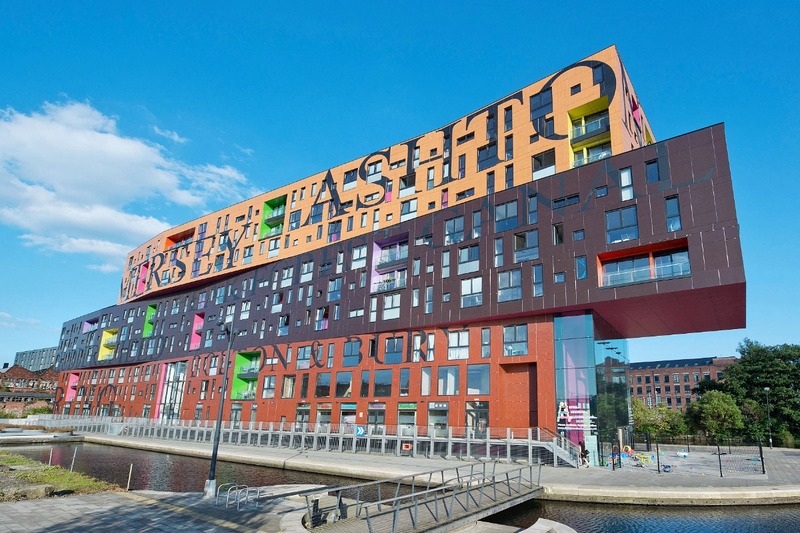 Manchester developer Urban Splash must pay back £46.5m in public money used for fire safety works, the First-tier Tribunal has ruled #UKhousing
The 260-page ruling comes after nearly three years of hearings concerning seven high-rise residential buildings in Manchester developed by Urban Splash between 2000 and 2008. They are: Burton Place in Castlefield; the Chips Building in New Islington; Christabel House, Emmeline House and Sylvia House in Dalton Street; the Moho Building in Ellesmere Street; and The Box Works in Worsley Street.
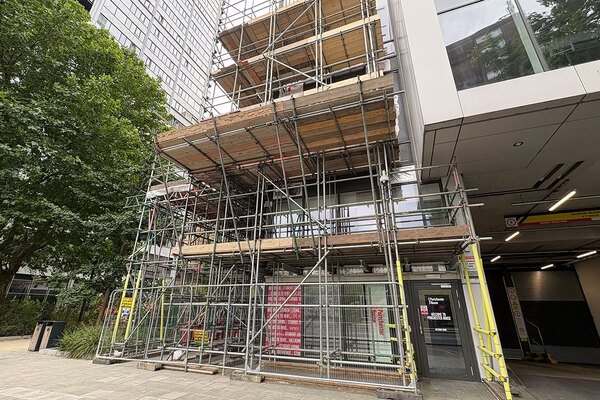
Following the Grenfell Tower fire, investigations were undertaken into the safety of those buildings. Each of the blocks had serious fire-safety defects.
Despite a dispute over the extent of these defects, the buildings were remediated at a total cost of £60m. Around £51.5m was paid from the government’s Building Safety Fund.
Read more

The Ministry of Housing, Communities and Local Government (MHCLG) subsequently sought an application for £46.5m in remediation contribution orders (RCOs) under the Building Safety Act 2022.
The outcome of the case rested on whether remediation costs funded by the taxpayer should continue to be borne by the taxpayer, or whether liability should be transferred to the developer and associated entities under the 2022 law.
In explaining their decision, the three judges said: “The developer nevertheless stands at the head of the hierarchy as to who should pay remediation costs, which provides a powerful starting point when applying that test.
“In the case of an associated entity, the nature and strength of its connections with the developer, the relevant buildings and any wider property-centred enterprise are important considerations in deciding whether it should contribute.
“The fact that the alternative may be to leave costs with the taxpayer is important but does not by itself make an RCO just and equitable.”
The judges added: “We accept that Urban Splash provided useful and responsible assistance with the post-Grenfell investigations into the safety of these buildings.
“But there is an important distinction between assisting those investigations and accepting financial responsibility for the resulting remediation, which [Urban Splash] did not do.
“Its present insolvency and the apparent difficulty of recovering contributions from others involved with the original developments do not outweigh the powerful case for requiring [Urban Splash], as developer, rather than the taxpayer, to bear the remediation costs.”
The tribunal subsequently made orders against Urban Splash Limited and four associated entities after finding the remediation work completed was not the cheapest conceivable solution. It imposed joint and several liability on the five respondents, having found no basis for dividing liability between them.
Housing secretary Angela Rayner said: “I welcome [the] decision that Urban Splash is ordered to repay more than £45m of taxpayers’ money spent fixing their unsafe buildings. The industry must pay its fair share. I’ll continue efforts to recover taxpayer funds.”
MHCLG was advised by Martin McKeague, Asia Munir and David Manda from law firm Walker Morris, plus three counsels from 39 Essex Chambers – Kerry Bretherton, Hannah Fry and Samuel Moss – and Alexander Burrell of 4 Pump Court.
Mr McKeague, real estate litigation partner at Walker Morris, said: “This outcome is an important step in the government’s efforts to recover public money spent on building safety remediation.
“This £46.5m decision demonstrates that responsibility for remediation can extend beyond the original developer to the wider enterprise, where it is just and equitable to do so.”
A spokesperson for Urban Splash said: “While we are reviewing it and taking legal advice, our focus is finding a constructive way forward with government while continuing to deliver much-needed homes and regeneration across the country.
“Making buildings safe and protecting residents and leaseholders is of fundamental importance to Urban Splash. We have remained closely engaged throughout the remediation process, and we are pleased that the tribunal recognised the ‘useful and responsible assistance’ Urban Splash provided with the post-Grenfell investigations into these buildings.
“We are, however, disappointed by the decision to include a number of entities which played no part in the original development of these seven buildings. This illustrates the extraordinary and far-reaching consequences of [the] ‘no-fault’ Building Safety Act, which allows liability to extend beyond the original developer to associated companies which played no part in the original development of the buildings concerned.
“The scale of the liability identified by the tribunal is significant for a business of our size. Throughout these proceedings, we have continued to work closely and constructively with government.
“We are particularly reassured that government and its agencies have continued to support and fund a number of Urban Splash development and regeneration projects. Our focus is firmly on the future rather than the past.
“The challenges created by the Building Safety Act are not unique to Urban Splash. This is not simply about one company. It is about finding a way in which the objectives of building safety, housing delivery and regeneration can all be achieved together.
“The outcome of the tribunal means we are now seeking to implement and work through a plan in partnership with the government and our other stakeholders.”
Sign up to our weekly Living newsletter
Inside Housing Living brings you exclusive analysis and big deals from the wider residential market, including build-to-rent, student living, later living, for-profit registered providers and more.
Already have an account? Click here to manage your newsletters.
Related stories