You are viewing 1 of your 1 free articles
Why are we not building more discount market rent?
Politicians are showing appetite for intermediate rental homes, but flexibility is key to getting them built, writes Olivia Harris, chief executive of housing charity Dolphin Living


 Politicians are showing appetite for intermediate rental homes, but flexibility is key to getting them built, writes Olivia Harris, chief executive of housing charity Dolphin Living #UKhousing
The introduction of the Key Worker Living Rent tenure by the mayor of London reflects a growing recognition that London’s housing system needs to do more for those who fall between social housing and the private rented sector.
As with much of London’s housing debate, the challenge is not policy intent, it is delivery. At a local level, boroughs are facing acute financial pressure, driven in large part by the rising cost of temporary accommodation. In that context, it is entirely understandable that many prioritise social housing delivery as the most immediate response to those in the greatest need.
With a record 73,000 households in temporary accommodation and over 336,000 on social housing waiting lists in 2025, and just 3,991 affordable homes started in London in 2024-25, the second-lowest figure since records began, it is clear why the focus is on crisis response.
However, this fails to recognise the viability challenges of delivering homes at social rent and ignores the widening affordability crisis in the housing market for households who do not qualify for social housing yet cannot afford market rents. At Dolphin Living, we see first-hand in our day-to-day work the increasing impact of the rising cost of housing for low and median earners.
Read more
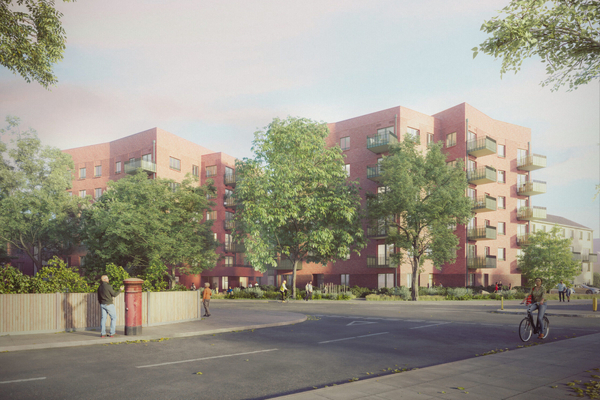
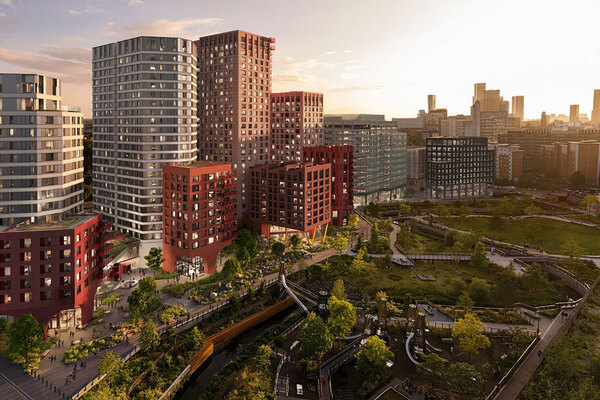
A growing proportion of households in the private rented sector, particularly working families, can afford some rent but not full market rent. The answer for these households is discount market rent (DMR). Dolphin Living is among the pioneers of DMR in London, setting rents at an average discount of 47% to market rents.
In setting rents, we are mindful of low and median earners as we aim to provide genuinely affordable options for households who would otherwise struggle in the private rented sector. We prioritise applicants with the greatest housing need, with the lowest household income, who can still afford the rent. In doing this, we are helping to prevent the households most in need from reaching the crisis point of homelessness.
This preventative role of DMR is often overlooked. Homes at below market rent made available to low and median earners can reduce the risk of rent arrears, eviction and ultimately homelessness, easing pressure on local authority resources that are already under strain.
If DMR is to play a more meaningful role, there are structural barriers that need to be addressed, such as how policy is applied in practice. Under the National Planning Policy Framework, build-to-rent developments are required to remain under single ownership.
At the same time, there can be an expectation from some local authorities that any affordable housing, including DMR homes, is owned or managed by a registered provider. These approaches do not always align and can introduce unnecessary complexity into delivery.
Our experience suggests that DMR does not always require a registered provider. Where homes are owned and managed by a professional landlord with a long-term interest in the asset, strong management standards and positive tenant outcomes can still be achieved. Greater flexibility in how DMR is owned would help unlock more homes.
Funding also remains a constraint. While DMR sits within the definition of affordable housing, it has not historically benefitted from the same level or consistency of grant funding as other tenures.
This has a direct impact on viability, particularly in London where delivering even discounted rents significantly impacts financial viability. The introduction of funding to support key worker housing is a positive step, but if DMR is to be delivered at scale, more funding for the wider DMR tenure is required.
This leads to a more difficult, but necessary, conversation around tenure mix. Social housing must remain a priority, particularly given the scale of need, but in the current viability climate, maintaining rigid tenure requirements risks preventing new homes from being delivered.
In some cases, introducing DMR, either alongside or in place of social housing, may unlock delivery. This is about maintaining, not reducing, the overall number of affordable homes, while enabling development schemes to move from consent to construction.
As we have seen elsewhere in the housing market, flexibility is often the key to unlocking delivery.
DMR should be viewed as part of a broader and more balanced housing system, one that reflects the range of needs across London’s population. There is clearly appetite for DMR from both policymakers and developers; the challenge now is to ensure that policy, funding and delivery models are aligned in a way that allows it to scale.
With alignment we can realise the opportunity to deliver more homes, and to support the growing number of Londoners who are priced out of housing, yet too often overlooked by policy.
Olivia Harris, chief executive, Dolphin Living
Are you subscribed to Inside Housing Living?
Inside Housing Living brings you exclusive analysis and big deals from the wider residential market, including build-to-rent, student living, later living, for-profit registered providers and more. Not subscribed yet?
Related stories