You are viewing 1 of your 1 free articles
The leasehold overhaul is a rare opportunity to rethink later living
Michael Voges, chief executive of Associated Retirement Community Operators (ARCO), says a modern alternative to leasehold could build the foundations for an ageing society


 Michael Voges, chief executive of Associated Retirement Community Operators, says a modern alternative to leasehold could build the foundations for an ageing society #UKhousing
A “modern homeownership structure that is used widely around the world” – this is how housing minister Matthew Pennycook described the government’s leasehold tenure reforms in a recent speech to the Institute for Government. A bill is expected before parliament by the end of the year.
But what does this mean for modern housing-with-care schemes, known as integrated retirement communities (IRCs)? Residents aren’t just buying a property, they are buying a lifestyle: 24/7 staffing, well-being services, communal amenities and, crucially, access to care when needed.
Read more

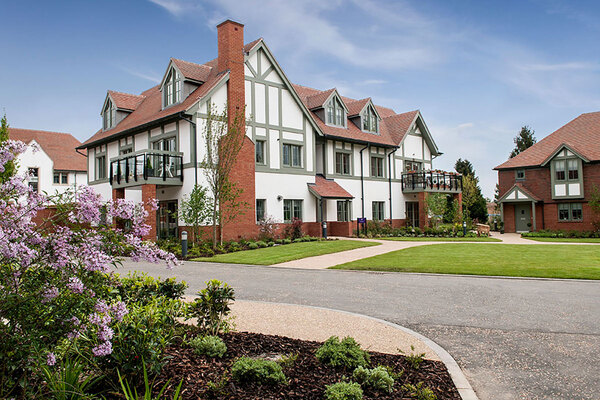
Around the world, modern housing-with-care is supported by tenure models that depart from traditional homeownership. Internationally, we see a range of approaches: deferred management fee models in Australia and New Zealand; entrance-fee systems in US continuing care retirement communities (CCRCs); short leases in Singapore; annuity-based arrangements in CCRCs in China.
The consistent theme is the use of bespoke tenures models built around housing-with-care rather than mainstream housing. In the UK, IRC operators have quietly but unmistakably departed from traditional leasehold over the last 20 years in order to give consumers what they want and ensure schemes are sustainable and work in the long term.
“As the government moves to overhaul leasehold and rightly shift toward commonhold... there is also a parallel opening to rethink tenure in the housing-with-care sector”
Operators have introduced fixed monthly fees and taken on long-term maintenance risk. Deferred management fees, sometimes known as event fees, are deployed to enable residents to use their housing wealth to access lower monthly fees and to support positive resale values (which remains the top public interest story for older people’s housing).
The resulting business models are focused on generating long-term operational returns, creating a sustainable alignment of interest between customers and operators.
This has not gone unnoticed. Mr Pennycook recently spoke to MPs about the “distinct operational and financial models” that underpin IRCs and the “important role” of the sector.
This is where reform presents a rare opportunity for housing-with-care. As the government moves to overhaul leasehold and rightly shift toward commonhold as a fairer, more transparent and internationally established form of ownership for general needs housing, there is also a parallel opening to rethink tenure in the housing-with-care sector.
ARCO has developed proposals for a ‘retirement occupancy lease’ (ROL) – a bespoke, modern alternative to traditional leasehold, specifically designed for IRCs.
Building on the lessons of New Zealand’s system of ‘occupational rights agreements’, the ROL would fundamentally reorient the legal framework for the IRC sector away from a static property-ownership framework towards fair, transparent, occupancy-based arrangements that can be updated for every new resident.
In the long term, the ROL could be a stepping stone toward a full, New Zealand-style contract-based tenure model for housing-with-care of a type that simply doesn’t exist currently in UK law.
“Ultimately, this isn’t just about tenure reform – it’s about building the right foundations for an ageing society”
There is momentum behind the ROL, and not just from ARCO members. MPs from across the political spectrum have quizzed the government about New Zealand and learning from international best practice in housing-with-care.
Parliament’s Housing, Communities and Local Government Committee has also recognised that a different approach for the IRC sector may be required compared to other leasehold housing, as long as it is appropriately targeted. Just as it is doing for general needs housing, the government should look at what works in other countries for specialist housing, including housing-with-care for older people.
The prize for the government is what happened in New Zealand when it introduced the Retirement Villages Act in 2003. It provided the legal clarity and consumer confidence needed for the sector to grow. Today, it is a global leader, and two of the three largest house builders in New Zealand are housing-with-care operators. The UK has the opportunity to follow a similar path.
Ultimately, this isn’t just about tenure reform – it’s about building the right foundations for an ageing society. Get those foundations right, and everything else becomes possible: more homes, better care, greater certainty for residents and a sector that can grow with confidence.
The retirement occupancy lease is not a silver bullet, but it is a practical, tested step toward a system that works better for longer lives.
Michael Voges, chief executive, Associated Retirement Community Operators
Sign up to our weekly Living newsletter
Inside Housing Living brings you exclusive analysis and big deals from the wider residential market, including build-to-rent, student living, later living, for-profit registered providers and more.
Already have an account? Click here to manage your newsletters.
Related stories