You are viewing 1 of your 1 free articles
Six months to go: it will pay to prepare for the Building Safety Levy
Housing developers need to factor in the new levy from the beginning of October. Knowing what’s coming and what’s required will help manage the pain, writes Stefanos Cholevas, project director at consultancy Stace


 Developers of new homes need to factor in the new levy from the beginning of October. Knowing what’s coming and what’s required will help manage the pain, writes Stefanos Cholevas of consultancy Stace #UKhousing
The UK residential development sector has come under enormous structural pressure recently, not least because of the Building Safety Act 2022 (BSA) progressively reshaping development processes.
Amid a slower planning and regulatory environment and higher compliance costs, residential developers now face another demand from the new Building Safety Levy (BSL), which comes into force on 1 October this year.
A core rationale for the BSL is shifting the onus of financial responsibility for remediating structural defects in new residential buildings onto developers. The levy aims to raise £3.4bn over the next 10 years from new developments to pay for correcting such building safety defects while relieving leaseholders and taxpayers of these costs.
Read more

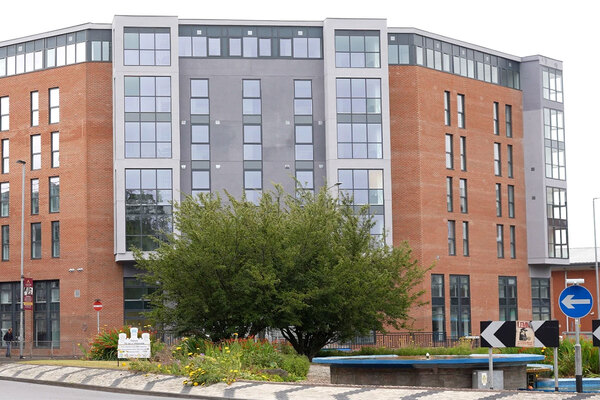

Facing another layer of cost and statutory requirements as the sector gets to grips with the current requirements of the BSA comes at an unhelpful time for the residential sector. But the BSL is on its way – so what do developers need to know to get prepared?
In or out?
It is worth looking at what is covered by the BSL and what is exempt. The levy will apply to a broad range of private residential schemes, including new private residential buildings, build-to-rent developments, purpose‑built student accommodation (PBSA), later living and retirement housing and mixed‑use schemes containing residential floorspace.
Exemptions are social and supported housing, hospitals, care homes, hotels, school accommodation, temporary homeless accommodation and domestic abuse refuges, sites with fewer than 10 dwellings (or fewer than 30 PBSA bedspaces), and non‑profit registered providers and their wholly owned subsidiaries.
Crunching the numbers
Levied at the building control stage, the BSL is chargeable on a £/square metre rate basis, which is set by each local authority when they publish their annual BSL schedules.
As an example, Kensington and Chelsea in London would be subject to the highest rate of £100.35 per square metre, with County Durham adopting the lowest rate, £12.70 per square metre. Partial reliefs apply to previously developed land.
The chargeable area includes all residential units, communal spaces, corridors, lobbies, circulation and internal ancillary areas. For the calculation of the BSL, developers must provide suitable information as part of their Building Control Application regarding the number of dwellings or PBSA bedspaces, the total chargeable residential floorspace, planning information and supporting evidence for any exemptions or reliefs they believe will be applicable on the final calculation.
Any subsequent planning changes to a scheme’s design, chargeable floorspace or exemption status may trigger a recalculation of the BSL.
The levy must be paid after construction has started, but before occupation or completion‑stage submissions. Where developers fail to make the statutory payments in full prior to completion of the development, final certificates can be withheld, resulting in a delay to legal occupation.
How to plan ahead
Navigating the further challenges this presents to viability and the impacts on gross development value (GDV) will require careful management and cost consultancy. With all this in mind, we are advising clients to pay particular attention to the following.
Where a consented residential scheme falls under the provisions of the BSL, developers must ensure that the Building Control Application has been concluded before the BSL enforcement day of 1 October 2026. As the legislation does not include any provisions for a transition period, any application submitted later than this date will automatically trigger the BSL liability.
For phased developments, earlier stages may be exempt, while those phases commencing after 1 October 2026 will be liable, proportionately to their floor area.
For developments where commencement is not projected, or where they are at risk of not meeting the BSL enforcement date, developers should be aware of the levy’s likely impact on the scheme’s GDV and its overall viability. As a result, they might want to consider adjusting the reduced residual land value.
The impact of programme delays on being able to meet the deadlines, alongside the risk of potential bottlenecks for approved inspectors and local authorities close to the deadline, should be considered and mitigated where possible. With just six months to go, proactivity will pay dividends.
The BSL introduces a new layer of regulatory cost at a time when the construction industry is already experiencing reduced output, declining planning activity and heightened compliance complexity.
Developers should carefully consider the implications of the BSL in their appraisals, particularly in conjunction with the challenging market conditions.
Stefanos Cholevas, project director, Stace
Sign up to our weekly Living newsletter
Inside Housing Living brings you exclusive analysis and big deals from the wider residential market, including build-to-rent, student living, later living, for-profit registered providers and more.
Already have an account? Click here to manage your newsletters.
Related stories