You are viewing 1 of your 1 free articles
Is single family investment here to stay?
There is plenty of room for single family housing to grow even if house builders shift back to market sale, says Helen Collins, head of UK living and affordable housing at property services firm Avison Young


 There is plenty of room for single family housing to grow even if house builders shift back to market sale, says Helen Collins, head of UK living and affordable housing at Avison Young #UKhousing
The drivers for the growth of the single family rental market are well understood: regional investor demand for low-rise rental homes remains strong; tenant demand for new-build rented homes remains strong; rental growth continues to perform well; cost and regulatory headwinds constrain the multi-family market; and mainstream housing for the sale market is steady, but unremarkable.
This creates the conditions for bulk deals at scale.
But what happens if the mainstream housebuilding market picks up on the back of further interest rate cuts, better first-time buyer mortgage rates, or even a return of Help to Buy? Will house builders revert to the market sale model? Will single family gradually shrink back to a bit part in the residential landscape?
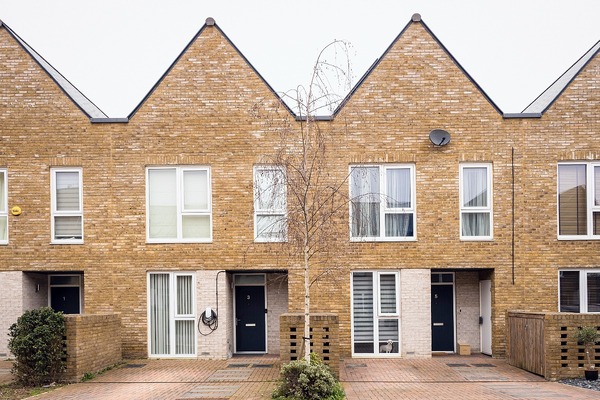
Our work brokering single family and affordable transactions with developers, house builders and investors, across the small and medium-sized (SME) to volume market, suggests single family will become embedded and mainstream where it continues to add value to the developer balance sheet.
“Single family will become embedded and mainstream where it continues to add value to the developer balance sheet”
The single family market – institutionally owned, professionally managed portfolios of houses for rent – remains small. Early market movers include the partnership between property developer Sigma and Countryside (which is now part of house builder group Vistry), which started over a decade ago. Vistry developed purpose-built sites for family rental homes owned and operated by Sigma.
Housing association Places for People set up its Picture Living Portfolio back in 2017. The portfolio has grown through the acquisition of phases of new-build homes on open market sale sites that have been made available to rent.
Why does single family work? From the developer/investor perspective, single family units let much faster than equivalent flats in build-to-rent blocks. Construction is lower risk and requires less capital.
Low-rise housing development offering phased handovers on a forward-funded model helps developer cashflow and, therefore, return on capital employed – a key metric. This cashflow can underpin early infrastructure-heavy phases on new sites at the same time as derisking market sale exposure.
On larger sites, single-family provision – alongside affordable supply and maybe retirement-living schemes – helps to create housing market choice for local communities. Greater tenure diversity supports the creation of successful, sustainable communities. The option of bulk sales to a single-family provider can also ensure development continues during times of low buyer demand and prevent cyclical slowdowns in output.
So, looking into a future where we expect and hope to see more large-scale delivery from new town development corporations and mayoral development corporations – urban extension and strategic sites – it’s logical to expect single family to continue to make a positive contribution to housing supply.
“Looking into a future where we expect and hope to see more large-scale delivery, it’s logical to expect single family to continue to make a positive contribution to housing supply”
At the other end of the scale, on smaller sites, SME developers can benefit greatly from the forward-funded single family model alongside affordable supply. This gives them access to steady cashflow, which provides pipeline certainty to build their supply chain and start on more sites, while enjoying secure income protected from the exposures of market sale.
There is a challenge in this part of the market. Investors and registered providers view the sector as higher risk. This is understandable, given the number of SME insolvencies, but it may make them reluctant to commit. Homes England’s low-cost debt fund for SMEs may create a surer financial footing and boost investor confidence to commit capital.
So, while some house builders may shift back to the market sale model in time, there is plenty of room for single family to continue to play an important role in meeting housing need. It supports a more diverse and robust supply market that we desperately need if we’re to reach for the 1.5 million new homes target.
Helen Collins, head of UK living and affordable housing, Avison Young
Sign up to our new Living newsletter

Sign up to Inside Housing’s new Living newsletter, bringing you exclusive analysis and big deals from the wider residential market, including build to rent, student living, later living, for-profit registered providers and more.
New to Inside Housing? Click here to register and receive our Living round-up straight to your inbox
Already have an account? Click here to manage your newsletters.
Related stories