You are viewing 1 of your 1 free articles
Sigma Capital interview: ‘I like to think we invented single-family housing’
Sigma Capital has had a huge influence on build-to-rent since it entered the market in 2014. Zainab Hussain sits down with residential investment director Rob Sumner to talk about why the landlord preferred suburban houses from the beginning, its successful REIT and what Sigma makes of the Renters’ Rights Act


 Rob Sumner, residential investment director at Sigma Capital, speaks to Zainab Hussain about the build-to-rent landlord’s model and its pioneering journey since 2014 #UKhousing
Suburban houses, or single-family homes, have come to dominate the build-to-rent (BTR) market. Single-family deals accounted for 58% of total UK BTR investment in 2025, according to property agency CBRE. And Sigma Capital, the Edinburgh-based BTR investor and manager, is happy to take credit for this.
When Inside Housing Living mentions Sigma Capital’s early role in single-family housing, Rob Sumner, its residential investment director, cuts us off, saying: “I like to think we invented it, pretty much.”
Inside Housing Living meets Mr Sumner at Sigma Capital’s modest Manchester office in the city centre, to learn about the firm’s decade-long journey as a single-family pioneer – and where the market might head next.
Read more



Sigma Capital has been in the BTR game since 2014. Today, it has £2.7bn of investment under management, 13,100 BTR homes delivered and contracted, and a significant number of homes in its pipeline.
Mr Sumner comes across as confident and eager to talk to Inside Housing Living. He has been at Sigma for 10 years, and has racked up 30 years in the living sector, with stints at property management firm DTZ (now subsumed into Cushman and Wakefield) and Savills.
Where it all started
Sigma Capital’s portfolio is predominantly made up of single-family houses, with a very small number of flats. The BTR landlord forward-funds single-family homes, manages the delivery of those homes, and then its operational platform – Simple Life Management – lets and manages the properties.
It was founded by Graham Barnet in 1996, and he is still the chief executive. Sigma Capital was assisting property-related regeneration projects in the public sector under partnerships with local authorities before its entry into the private rented sector in 2014.
That is when the landlord launched Thistle Investments, its first fund and the first BTR single-family housing fund in the UK, totalling £107m to build 918 homes. It launched a second fund the following year, UK PRS Properties, totalling £100m to build 821 more homes.
In 2016, Sigma Capital secured a major funding agreement from Homes England and set up the Simple Life brand, now the largest BTR single-family housing brand in the UK.
In 2017, it launched PRS REIT, with an initial public offering (IPO) on the London Stock Exchange raising £250m. The next year, the real estate investment trust (REIT) raised the same amount again.
Later, Sigma and EQT Real Estate, the property platform of global investment firm EQT, launched a London joint venture (JV) with an initial £300m equity committed, including £15m from Sigma.
2021 was another big year for Sigma. It sold the Thistle fund to Goldman Sachs, its PRS REIT raised a further £55.6m and it launched the Simple Life London brand.
The next year, the London JV’s initial tranche of equity was committed, with a potential total investment of over £1bn.
In 2024, PRS REIT entered the FTSE 250, having completed 5,400 homes, pushing out Virgin Money.
Sigma also sold the UK PRS Fund to Citra Living, a rental homes company owned by Lloyds Banking Group.
The following year, the PRS REIT portfolio was sold to a group of UK pension funds.
“I think the highlight was probably the launch of the PRS REIT, because I actually got to turn up on that day with the rest of the team and open the London Stock Exchange, which is something that you don’t get asked to do very often,” Mr Sumner says.
“When we launched the REIT, we launched an IPO. Ultimately, we raised £500m of equity, put another £400m or so down on top of that, and populated this real estate investment trust, which performed pretty much flawlessly throughout its life. So that was a real high point,” he adds.

When the BTR landlord entered the single-family market, its aim was to provide good-quality housing for people who couldn’t buy a home. The homes would provide people with the same lifestyle, house type and location as if they were buying, but with an easier access point.
“When I started to get involved in build-to-rent, it was multifamily,” Mr Sumner says, referring to his time at Savills as a director, “but [Sigma Capital] took a slightly different path. Some of the great things about single-family are you can start occupying properties through your build period and start enjoying income at that point, because you’re building houses as opposed to building 200 apartments.
“[Our] long-term goal is to continue doing what we’re doing and take it as far as we can, because the marketplace for what we do is very, very strong.
“We have oodles of demand out there for our stock. We see little reason for that to change.
“Clearly, there’s a few global ructions going on at the moment, so there’s a slight cloud on the horizon, [but] the fundamentals remain the same: people need places to live [and] we’re delivering places to live.”
He says the current round of capital Sigma is deploying will build around 700 homes over the course of this year, at least a further 400 homes into next year, and “a few stragglers that will stretch out a little bit further beyond that”. The BTR landlord will be deploying further capital into the future.
As an early mover in the single-family market, how does Sigma Capital feel about new competition coming in?
“I think we see it as justification for a sector we fundamentally founded,” Mr Sumner responds.
“We’re not just buying already-constructed homes, but aiding the housing demand by creating new homes and neighbourhoods, so we welcome additional entrants to the sector. It can only improve supply and quality for those looking for rental homes.”
The journey
What changes and challenges has Sigma Capital faced since 2014?
“We’ve kind of super-sized our proofs of concept from those earlier funds, to [take] a much more national approach to our portfolio,” Mr Sumner says.
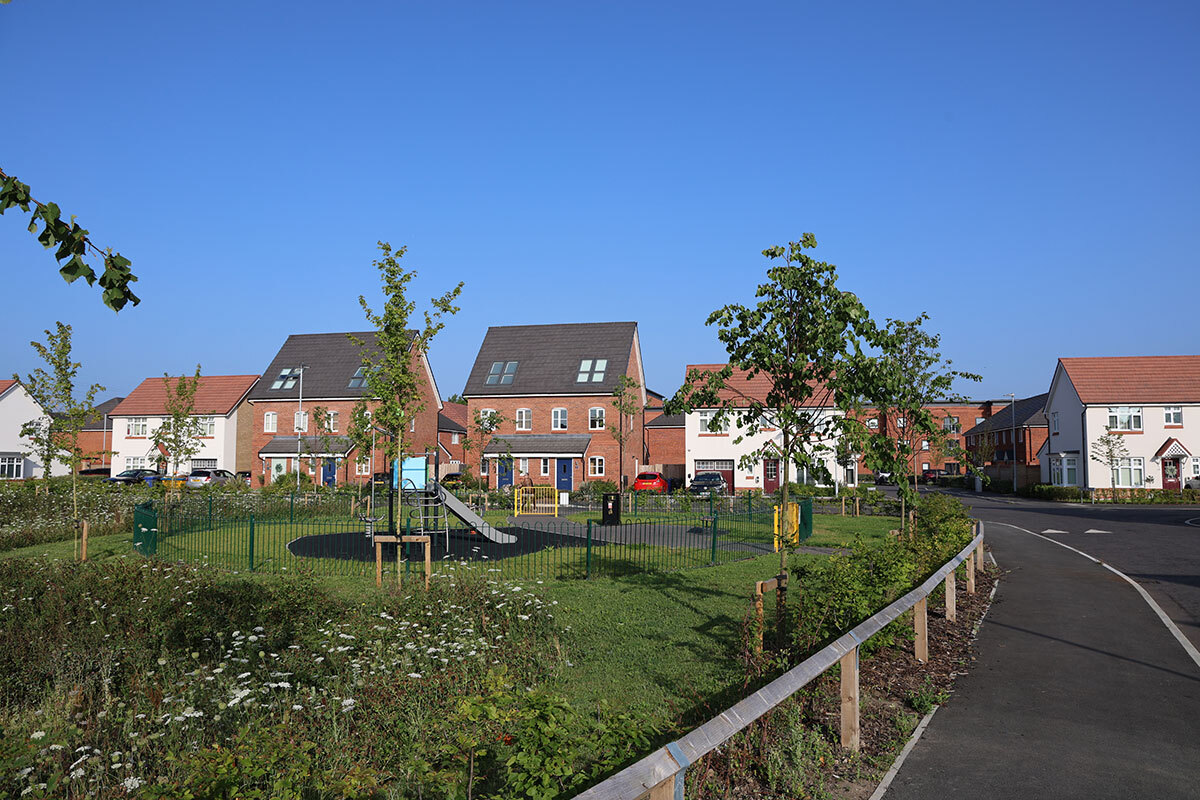
“So, whereas our initial portfolios were pretty much concentrated around the North West of England – there were a few exceptions – now, the portfolio stretches from Edinburgh down to Southampton.”
He adds that a “fairly sound basis for an acquisition or investment approach” includes building where people can work and get to places to work, and where children can go to school and there is a “good primary education”.
The locations of Sigma Capital’s future projects will “fall to opportunity and viability”, Mr Sumner adds.
“When you aggregate an awful lot of properties across a large geographic area, you potentially do insulate that portfolio from perhaps local economic tremors, [for example] factories closing down, things like that, and then it gives you the time to actually be able to manage those properties through [and] get them back to where they need to be.”
To overcome operational challenges, Sigma Capital has approached each acquisition in the same way.
“Fundamentally, what we decided to do was tread the same road pretty much every time we did something,” Mr Sumner says.
“To use the same professionals, the same methodology across all of our funds, so that everything was very metronomic for our housebuilding partners, because there’s nothing better than being able to have done one deal with a partner, and this is kind of key, and then when they come to you to do a different deal, to actually be able to replicate exactly the same path again.”
The “biggest [challenge] of the lot”, Mr Sumner adds, was the Covid pandemic. At the time, some of Sigma Capital’s tenants were furloughed or had different working hours and patterns, affecting their ability to pay rent.
Mr Sumner says the BTR landlord “took a decision very early” to ask tenants to communicate these issues and arrange a payment deferral. Since then, all the deferred rent has been paid back.

Sigma Capital focuses on forward-funding new build homes from house builders. Mr Sumner says the company has only bought existing properties to acquire additional homes on shared sites it is already on.
“The one thing we would be keen to avoid, in those situations, is being too pepper-potted around a site,” Mr Sumner points out. “What I like to have is a defined ownership within a red line. [You] can’t see the red line, but we know that those two streets are ours, or that corner of the site is ours, and then that helps with things like maintenance.”
He adds: “If you’ve got a red line there, and another red line over there, and another one over there, suddenly some of your efficiency starts to slip.”
What lies ahead
Very soon, the sector will have to comply with the Renters’ Rights Act, which will mean some operational changes for BTR landlords.
“I think, before anything like this comes in, there’s always going to be a certain amount of fear, or should I say anticipation, around what the potential impacts of it are going to be,” Mr Sumner says.
“I think anything that professionalises a sector, puts a looking glass up against the sector, has got to be a great thing for consumers.”
He tells Inside Housing Living that Section 13 of the Renters’ Rights Act was introduced into Sigma Capital’s tenancies two-and-a-half years ago, because the provisions “work really well” from a BTR perspective.
Under Section 13, landlords can increase rent in periodic tenancies once a year with notice, using an official form. Tenants can challenge the increase through a tribunal if they believe the increase is above market rate.
“I think anything that professionalises a sector, puts a looking glass up against the sector, has got to be a great thing for consumers”
The average buy-to-let landlord has one or two homes, Mr Sumner says, so it is “comparatively straightforward” to renegotiate rents. “They speak to their tenants... they have their little back and forth [and] they arrive at a number, and a new lease is issued.
“When you’ve got thousands of units, it’s a little bit more difficult to have those conversations.
“Having a fair approach to the renewals, but an automated way of delivering those renewals, is actually really quite handy.”
Mr Sumner questions whether there will be sufficient capacity to deal with the number of tribunals. He says Sigma Capital already faces them “occasionally”, but 80% of tenancies are renewed.
Will the Renters’ Rights Act force more buy-to-let landlords off the market and more BTR landlords in instead? Mr Sumner says there is a “degree of inevitability about this”.
“The consumer demand for [BTR] is very, very strong. So I think it’s inevitable that it will grow.”
Opportunity
What does the future look like for single-family housing?
“The marketplace, I think, will continue in the same vein,” Mr Sumner says.
“Ultimately, we require very little to keep this going – not just Sigma, [I’m] talking about the industry as a whole. It’s an attractiveness of capital to come into the sector that actually sees it as a suitable place to put its money.”
One area for improvement, Mr Sumner points out, is having enough capacity within the planning process.
“The bit that holds it all together is the ability to take that concept and get it through to a point where it can actually be built.
“Somewhere in the middle of that, there’s a planning system which does need a degree of overhaul and can actually deal with capacity.
“Typically, we’ve always been a very safe haven for global equity,” Mr Sumner says, referring to England. “Hopefully that continues to be the case.”
Sign up to our weekly Living newsletter
Inside Housing Living brings you exclusive analysis and big deals from the wider residential market, including build-to-rent, student living, later living, for-profit registered providers and more.
Already have an account? Click here to manage your newsletters.
Related stories