You are viewing 1 of your 1 free articles
Beyond the big cities: PBSA’s overlooked markets
Shifting visa rules, rising tuition fees and questions around long-term enrolment trends have made investors more selective, writes Rebecca Shafran, an alternative markets research director at BNP Paribas Real Estate


 Shifting visa rules, rising tuition fees and questions around long-term enrolment trends have made investors more selective, writes Rebecca Shafran of BNP Paribas Real Estate #UKhousing
Conviction is returning to the UK’s commercial real estate markets. Easing debt costs, relatively cheap entry points and the prospect of returns well above long-run norms should begin to fuel a recovery in transaction volumes during 2026. The Investment Property Forum’s latest forecasts suggest UK all-property total returns will reach 8.4% in 2026, up from 7.1% last year.
Still, uncertainty lingers and fundamentals are diverging across sectors, prompting capital to cluster around a narrow range of asset types and geographies: prime offices, logistics, data centres and retail parks, for example. That leaves an important question: where else should investors be looking?
Read more
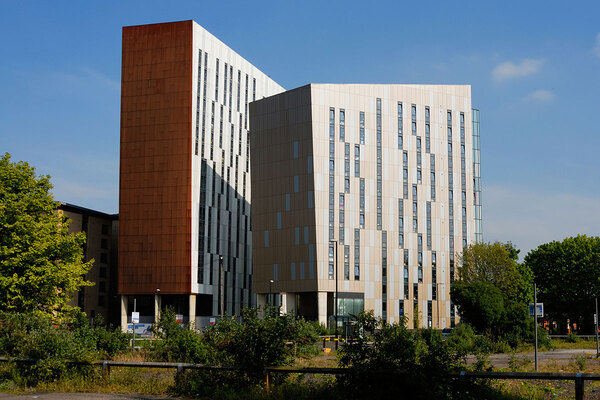


While the purpose-built student accommodation (PBSA) market has faced challenges recently, investor sentiment remains robust. It ranked third in the sector outlook for the PwC/ULI Emerging Trends in Real Estate: Europe 2026 report and consistently ranks in the top 10, so demand is clearly strong, but the financial health of some UK universities has become a concern during the past 18 months or so.
Shifting visa rules, rising tuition fees and questions around long-term enrolment trends have made investors more selective, concentrating capital in cities with top-ranked, Russell Group universities, where institutions are seen as more resilient to policy changes and international demand continues to build.
Development pipelines complicate the picture. Some of the more attractive cities are relatively well supplied, and others have sizeable pipelines, while cities and towns with non-Russell Group universities are beginning to look undersupplied. The imbalance prompted us to take a closer look at the 50 largest university cities in the UK to understand where the overlooked opportunities might lie.
Measuring provision
To do this, we analysed a range of indicators designed to capture both demand-side strength and supply-side constraints. On the demand side, we focused on total student numbers, the proportion of international students and growth in international enrolments, given international students’ preference for PBSA.
On the supply side, we looked at the number of students per PBSA bed, a proxy for undersupply, as well as student satisfaction scores from StudentCrowd, which served as a qualitative measure of existing stock quality.
Finally, we incorporated the Next X Student Quality of Life Index, which scores each city on a set of 10 lifestyle and infrastructure-related metrics. The aim was to identify locations where demand is strong or rising, supply is constrained or inadequate, and there is a broader rationale for investment tied to improving the student experience.
Several non-Russell Group cities stood out. Hatfield, Middlesbrough, Derby and Lincoln each demonstrated strong growth in international student numbers and already host relatively high proportions of overseas students. Some have established global partnerships, and all benefit from a relatively lower cost of living compared to many Russell Group locations.
Many are close to major manufacturing hubs or are undergoing significant campus improvements, which further supports long-term student growth and PBSA viability. Crucially, they also share signs of underprovision: student-to-bed ratios are significantly below average, with Hatfield and Middlesbrough the most acute, at 3.5 and 5.4 students per PBSA bed, respectively.
Tuely Robins, director of strategic partnerships at StudentCrowd, adds: “As cost pressures squeeze traditional hubs, the search for untapped PBSA markets has intensified. StudentCrowd provides the granular resident insight necessary to ensure new supply meets specific student demand.
“In these overlooked locations, the endorsement of first residents, tracked through verified data, is the greatest lever any owner or investor can pull to secure a competitive edge and long-term asset viability.”
StudentCrowd satisfaction scores for existing PBSA are below four out of five in most of these markets (with the exception of Derby), pointing to potential quality issues or unmet expectations. Meanwhile, each city scored modestly on the Next X Student Quality of Life Index, suggesting that targeted investment in modern, well-located PBSA could materially improve both the student experience and institutional competitiveness.
International partnerships
Middlesbrough perhaps presents the most compelling investment case. Its student-to-bed ratio of 5.4 compares to 2.0 in London, 2.1 in Manchester, 1.5 in Birmingham and 1.8 in Bristol. The number of international students at the city’s university, Teesside, has surged 40% in the last two years, in part thanks to partnerships with institutions in Italy, Sweden, Singapore and Malaysia. That brings the proportion of international students to more than a third.
Local government has already taken steps to alleviate the acute shortage of suitable accommodation. In April 2025, Middlesbrough Development Corporation Planning Board approved a £200m regeneration project that will include a new hotel, 240 build-to-rent properties and more than 400 student beds. While that is a good start, more could be delivered to satisfy demand from the university’s 13,545 full-time students.
That’s not to say Hatfield, Derby and Lincoln should be overlooked. At the University of Hertfordshire in Hatfield, international student numbers have climbed 43% over the past two years and now account for more than half of all students. At the University of Lincoln, the number of international students has nearly doubled, making up over 20% of the total.
Similarly, the University of Derby has seen a 40% surge in international student numbers, who now represent a fifth of the student body. Derby also benefits from a strong industrial base – home to major employers such as Rolls-Royce, Alstom and JCB – which enhances its appeal to graduate talent.
Cultural factors
Granted, there are other metrics worth considering. Planning can be more difficult in places not used to high-rise residential.
There may be cultural factors at play, too: students in some areas are more likely to live at home. More than a fifth of full-time students at Teesside University in Middlesborough, for example, live at home, compared to 9% at the University of Manchester, 6% at the University of Leeds and 5% at the University of Nottingham. This could, however, reflect poor provision just as much as a cultural preference for staying at home.
For PBSA investors seeking long-term income, sustainable occupancy and better entry points, these less familiar university towns could present a compelling opportunity if there is a clear view that these trends are embedded in the long term. The fundamentals – rising international demand, constrained supply and swelling investment – are increasingly evident.
But while most investors look elsewhere, first-movers will be best placed to secure sites, shape placemaking and build the next generation of PBSA. In a market where capital continues to crowd into the same few cities, it’s those willing to look again – and look closely – who stand to benefit most.
Rebecca Shafran, research director in the alternative markets team, BNP Paribas Real Estate
Sign up to our weekly Living newsletter
Sign up to Inside Housing Living’s newsletter, bringing you exclusive analysis and big deals from the wider residential market, including build-to-rent, student living, later living, for-profit registered providers and more.
Click here to register and receive the Living newsletter straight to your inbox.
And subscribe to Inside Housing Living by clicking here.
Already have an account? Click here to manage your newsletters.
Related stories